 EnglishEnglish


Views: 0 Author: Site Editor Publish Time: 2026-06-16 Origin: Site


Failing an EU GMP Annex 1 or FDA audit due to inadequate HVAC filtration carries severe business risks. Undocumented maintenance or compromised airflow systems routinely trigger facility shutdowns and expensive product recalls. You face a constant tension when managing these sterile manufacturing environments. You must maintain strict cleanroom parameters, including precise air changes per hour and strict particulate limits. At the same time, you need to minimize facility downtime and streamline operational workflows. Selecting a gmp compliant hepa requires mapping precise efficiency ratings directly to your specific production zones. You must then back this critical selection with a risk-based, data-driven replacement schedule. Adopting this rigorous strategy guarantees continuous compliance, protects your product yield, and optimizes your overall facility management lifecycle.
Regulatory Alignment: Selecting the right high efficiency particulate filter requires mapping EN 1822 / ISO 29463 efficiency classifications directly to EU GMP Annex 1 Grades (A, B, C, D).
The H14 Standard: An H14 HEPA filter (99.995% efficiency at MPPS) is the baseline requirement for critical sterile manufacturing zones (Grades A and B).
Data-Driven Replacement: Time-based replacement is obsolete; modern compliance relies on a lifecycle approach utilizing terminal pressure drop data and routine PAO aerosol integrity testing.
The EN 1822 standard provides a rigid evaluation framework for HEPA classifications. It assesses performance based on the Most Penetrating Particle Size (MPPS). Particles measuring between 0.1 and 0.2 microns behave unpredictably. They often evade both direct physical interception and natural Brownian motion. Testing laboratories use these elusive particles to determine a filter's true capabilities.
H13 filters consistently capture 99.95% of particles at this difficult MPPS threshold. They offer excellent, reliable performance for a wide variety of background environments. You can confidently install an H13 cleanroom air filter within GMP Grade C or D zones. These secondary areas maintain less stringent particulate limits than primary filling lines. Deploying H13 units here prevents unnecessary strain on your air handling systems while easily maintaining validated parameters.
However, critical zones demand a much higher standard of protection. The h14 hepa filter emerges as the defensible choice for these areas. It successfully captures 99.995% of particles at MPPS. This represents a massive tenfold reduction in particulate penetration compared to the H13 grade. You must treat this rigorous standard as strictly non-negotiable. Oral solid dosage (OSD) manufacturing and sterile aseptic processing require this exact level of filtration. GMP Grade A and B environments mandate H14 to ensure absolute product safety.
We must also maintain a skeptical lens regarding filtration upgrades. Many facility engineers fall into the "over-speccing" trap. They mistakenly specify U15 or higher ULPA filters in environments where H14 comfortably suffices. ULPA filters feature extremely dense media matrices. This density creates significantly higher airflow resistance. Your HVAC system must push harder to maintain necessary air change rates. Over-specification rarely yields tangible compliance benefits during an audit. It simply complicates system balancing and accelerates wear on your blower motors.
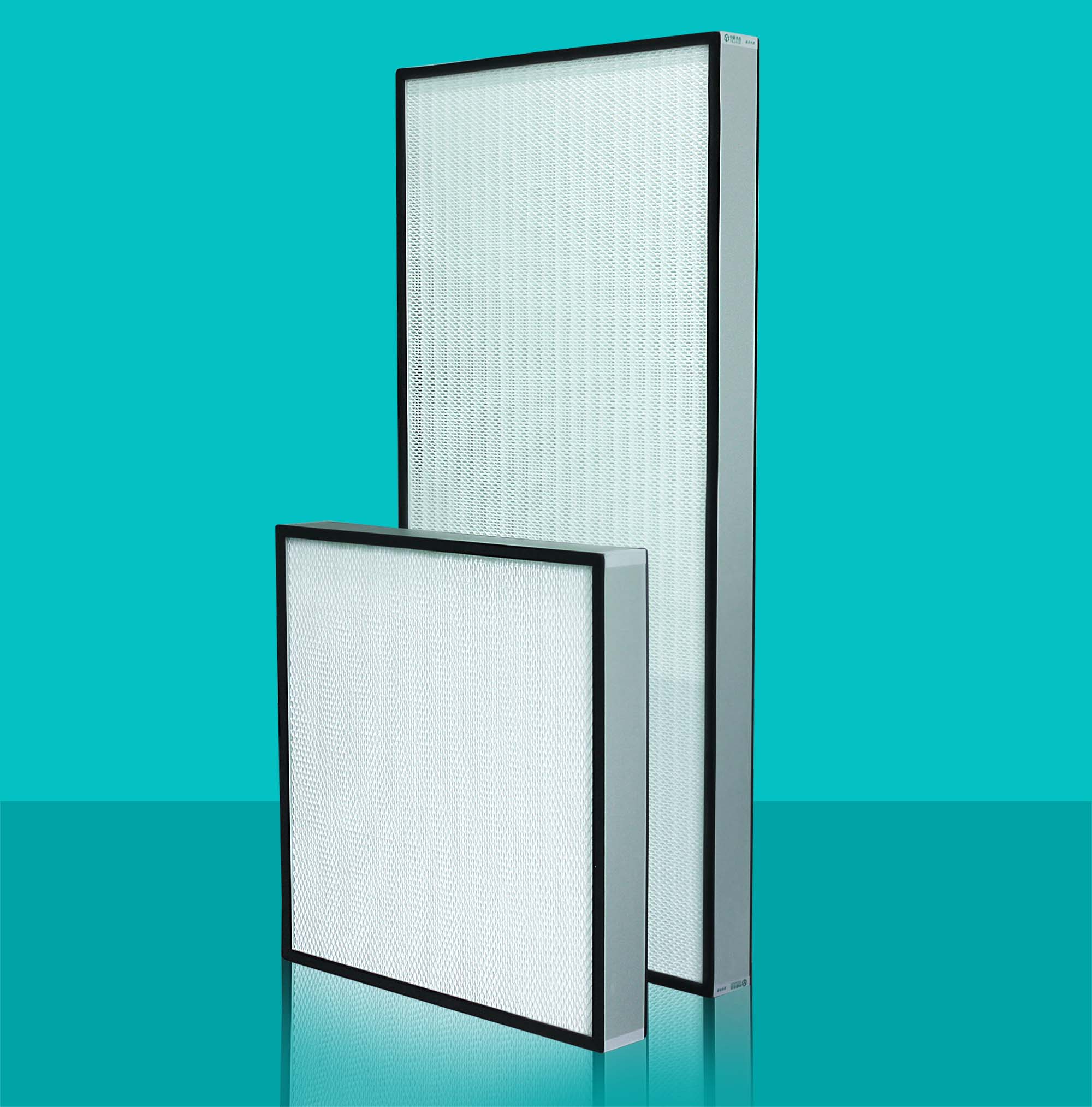
Auditors rigorously evaluate your facility's contamination control architecture. They look for a deeply documented rationale connecting your HVAC design directly to your overarching Contamination Control Strategy (CCS). You cannot select filtration grades arbitrarily. Every choice must directly reflect the specific risks associated with that manufacturing zone. Failing to properly map your filtration grades invites severe regulatory deviations.
Grade A and B environments strictly demand unidirectional airflow to protect exposed sterile products. These critical zones require mandatory terminal filtration. You must position your hepa filter cleanroom units directly at the point of air delivery. This terminal placement ensures clean air immediately sweeps potential contaminants away from the aseptic core. Ductwork upstream of the terminal filter does not impact the final air quality.
Conversely, Grade C and D environments rely heavily on mixed-airflow dynamics. Dilution principles govern the contamination control methodology in these background areas. Facilities typically stage multiple filtration steps to manage heavy particulate loads efficiently. You should install robust pre-filters upstream within the primary air handling unit. This staging protects the final HEPA media from premature loading and extends the overall maintenance interval.
Documentation standards remain universally stringent across all GMP grades. Factory individual test reports are absolutely mandatory. Before installation, you must verify leak testing and efficiency mapping for every single module. The serial number on the physical unit must perfectly match the provided factory certificate. Auditors will swiftly reject any unit lacking this specific, verified traceability.
You must actively shift your maintenance strategy away from reactive "run-to-fail" methods. Arbitrary calendar intervals, such as replacing filters "every three years," no longer satisfy modern regulatory expectations. Modern compliance requires a deeply documented lifecycle approach based on empirical, real-time data.
Monitoring initial versus final resistance provides the first major indicator for replacement. Every filter features a specific initial pressure drop upon installation. As the media captures particles, resistance naturally increases over time. A widely accepted terminal pressure limit equals twice the initial resistance value. Once the resistance exceeds this critical threshold, airflow velocity begins to degrade rapidly. The HVAC system can no longer sustain validated air change rates.
Integrity testing failures serve as the second critical indicator. Recurring pinhole leaks signal immediate trouble. If a filter repeatedly fails PAO or DOP aerosol scans, you must replace it immediately. You cannot rely on patching large sections of the delicate media surface. Industry standards strictly limit allowable repair areas. If leaks persist or exceed these physical limits, replacement becomes mandatory, regardless of the current pressure drop readings.
Maximum service life represents the third key replacement indicator. Broad industry consensus, heavily supported by ISPE guidelines, caps the maximum allowable service life. Facilities typically enforce a hard limit of 5 to 7 years. Filter media experiences inevitable physical degradation over time. Potting compounds dry out, gaskets lose elasticity, and structural binders break down. You must replace the unit at this chronological limit even if all resistance and integrity metrics appear perfectly normal.
Follow these essential lifecycle tracking steps:
Log the exact initial pressure drop immediately after initial system balancing.
Record resistance readings actively during your weekly environmental monitoring rounds.
Document exact physical installation dates in your centralized maintenance database.
Flag units approaching their 7-year expiration window for proactive replacement scheduling.
Purchasing a certified filter represents only the initial step of compliance. Installation validation is the rigorous process that actually passes regulatory audits. The unit must perform flawlessly under real-world operating conditions within your specific ceiling housing.
Aerosol Photometry, commonly known as PAO testing, verifies this critical performance. Standard operating procedures (SOPs) dictate the exact criteria for measuring downstream penetration. Technicians introduce a controlled challenge aerosol upstream of the filter face. They then carefully scan the entire media surface, the surrounding frame, and the gasket seals. This meticulous scan verifies that no leaks developed during shipping or physical installation. You need absolute assurance that the installed high efficiency particulate filter maintains perfect operational integrity.
Regulatory expectations clearly dictate strict testing frequencies based on environmental risk. For critical Grade A and B zones, you must execute integrity tests every six months. For background Grade C and D zones, annual testing typically meets auditor expectations. Missing these critical testing windows directly violates GMP guidelines and puts entire product batches at immediate risk.
You must also practice diligent risk mitigation during these validation exercises. Improper testing procedures pose significant physical risks to the filtration media. Using excessive aerosol concentrations can rapidly blind the microscopic media pores. This operational mistake prematurely loads the filter, artificially spikes the pressure drop, and accelerates mechanical failure. Ensure your validation technicians strictly adhere to validated aerosol concentration limits during every single test cycle.
Facility engineers must demand uncompromising standards from their filtration manufacturers. Traceability stands out as a paramount evaluation criterion. You need serialized tracking for every single unit delivered to your facility. Seamless digital access to factory test certificates streamlines audit preparation immensely. If a vendor struggles to provide instant, matched documentation, you should eliminate them from your supply chain consideration.
Material compliance also requires incredibly rigorous scrutiny. Request detailed off-gassing data before approving any new filter design. Demand pharmaceutical-grade potting compounds that resist degradation under continuous, intense airflow. You should carefully evaluate gel-seal versus dry gasket performance based on your specific housing architecture. A robust polyurethane gel-seal often provides superior, self-healing leak prevention in complex cleanroom ceiling grids.
Consider the direct relationship between filter media surface area and long-term performance. Units featuring deeper pleats naturally increase the total media area. This expanded surface area dramatically lowers initial pressure drop out of the box. It also allows the filter to hold significantly more particulate mass before reaching its terminal resistance threshold. This structural efficiency extends the operational lifespan and keeps the HVAC system running smoothly within validated parameters.
| Filter Class (EN 1822) | Efficiency at MPPS | Penetration Limit | Recommended GMP Grade |
|---|---|---|---|
| H13 | 99.95% | 0.05% | Grades C & D |
| H14 | 99.995% | 0.005% | Grades A & B |
| U15 | 99.9995% | 0.0005% | Micro-electronics (Avoid in GMP) |
We recommend undertaking several specific next-step actions. Conduct a comprehensive, facility-wide HVAC audit to baseline all current pressure drops across your environments. Map your upcoming replacement windows directly to your scheduled plant shutdowns. This proactive alignment prevents highly disruptive maintenance bottlenecks and ensures seamless compliance continuity.
A fully compliant cleanroom environment carefully balances precise efficiency ratings with exceptionally strict replacement intervals. The H14 classification remains the absolute baseline requirement for critical Grade A and B zones. Proper lifecycle management proactively prevents catastrophic audit findings and reduces unnecessary strain on your maintenance teams. Replacing units based on hard data—like pressure drop thresholds and integrity test results—vastly outperforms arbitrary calendar schedules. We strongly prompt you to review your current Contamination Control Strategy (CCS) today. Consult with a dedicated filtration specialist to assess your upcoming replacement cycles and secure your essential test documentation.
A: There is no strict regulatory time limit for replacement. Timing depends on maximum pressure drop limits and integrity test results. If a filter fails its biannual or annual PAO scan, you must replace it immediately. Furthermore, physical degradation of gaskets and media dictates a maximum service life. Industry guidelines typically recommend replacement every 3 to 7 years, even if performance data appears acceptable.
A: An H13 filter captures 99.95% of particles at the Most Penetrating Particle Size (MPPS). We typically specify H13 for lower-grade cleanrooms like GMP Grades C and D. Conversely, an H14 filter captures 99.995% of MPPS particles. This delivers a tenfold reduction in penetration. We consider H14 the absolute standard for critical GMP Grade A and B aseptic environments.
A: No, you absolutely cannot clean or reuse them. These units rely on a highly delicate fiberglass or synthetic media matrix. Any physical cleaning attempt permanently destroys the fragile media structure. This action immediately invalidates the factory efficiency certification. Attempting to wash or vacuum the media guarantees a catastrophic failure during integrity testing and a subsequent audit failure.
A: Premature test failures stem from several common causes. Improper installation frequently damages fragile gaskets or creates housing leaks. Poor pre-filtration strategies also cause premature media loading. Additionally, technicians might use excessive aerosol concentrations during previous testing cycles. High concentrations blind the media pores, artificially raising resistance and inducing early operational failure. Always ensure testing personnel follow validated aerosol limits.


