 EnglishEnglish


Views: 0 Author: Site Editor Publish Time: 2026-06-09 Origin: Site


Pharmaceutical facilities face intense regulatory scrutiny during sterile material transfers across varying cleanroom classifications. Moving items from Grade C to Grade A or B environments presents massive contamination risks. Manual wipe-down procedures create unacceptable variability. They introduce significant human error into your containment strategy. Poor manual disinfection risks entire batch sterility. This failure routinely triggers severe FDA and WHO audit penalties. To solve this, facilities deploy an automated vhp pass box. This equipment entirely eliminates operator dependency. It delivers a highly verifiable, repeatable 6-log reduction of biological burdens during material ingress. In this comprehensive guide, you will learn the exact biodecontamination phases necessary for GMP compliance. We also detail the mandatory qualification protocols you must follow. Facility managers will gain actionable insights on integrating these advanced units while effectively mitigating operational workflow delays.
VHP pass boxes replace subjective manual disinfection with a validated, automated biodecontamination cycle for strict GMP compliance.
The decontamination process requires a precise 4-phase cycle—dehumidification, conditioning, decontamination, and aeration—to achieve a 6-log sporicidal kill.
Facility integration requires evaluating standalone versus integrated VHP generators, HVAC compatibility, and cycle time impacts on operational workflows.
Successful deployment hinges on rigorous IQ/OQ/PQ validation, including chemical and biological indicator mapping, to satisfy FDA and WHO sterile processing guidelines.
Cross-contamination at material transfer points serves as a primary vector for cleanroom sterility breaches. Operators manually moving components often inadvertently introduce microscopic spores. Facilities routinely struggle when bridging zones of differing cleanliness classifications. Transitioning away from traditional UV lights or subjective manual wipe-downs is no longer optional for modern pharmaceutical manufacturing. Active gas sterilization now strictly aligns with WHO Annex 2 guidelines. It also meets stringent FDA expectations for modern aseptic processing protocols.
When you install a highly engineered cleanroom transfer hatch equipped with vapor capabilities, you successfully connect these critical zones. The equipment ensures you never compromise the facility pressure cascade. It rigorously maintains the critical sterile boundary at all times. Modern manufacturing demands more than just a physical barrier. It requires an active decontamination gateway capable of absolute biological elimination.
Your success criteria depend on highly consistent bio-burden elimination. You need measurable, unalterable data logging for every single batch record. Furthermore, you must achieve this high-level sterilization while causing minimal disruption to facility throughput. Regulatory bodies want to see automated assurance. They no longer accept manual logs as definitive proof of sterility. By utilizing vaporized gas, you reach occluded surfaces and complex geometries. Manual wiping simply cannot achieve this critical level of surface contact.
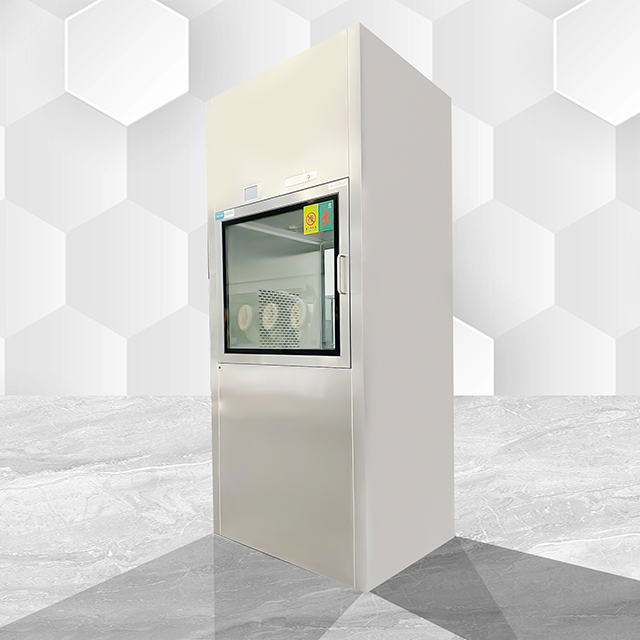
Understanding the exact cycle phases ensures you achieve consistent regulatory compliance. Every validated vhp decontamination chamber follows a precise, scientifically proven four-step process. Skipping or rushing any phase jeopardizes the entire sterilization cycle and puts your cleanroom at risk.
Phase 1: Dehumidification. The system rapidly reduces relative humidity below 20 to 40 percent. This critical step prevents micro-condensation on the load. It optimizes the overall sporicidal efficacy of the hydrogen peroxide vapor. High humidity causes the vapor to condense too quickly. This creates microscopic wet spots and drastically reduces the kill rate.
Phase 2: Conditioning. The generator injects the vaporized gas rapidly. It usually employs a heated plate to flash-evaporate liquid H2O2. This brings the chamber atmosphere up to the exact target concentration required for sterilization. The system monitors this ramp-up phase continuously using internal sensors.
Phase 3: Biodecontamination (Dwell Time). The unit maintains this optimal vapor concentration for a specifically calculated duration. This phase achieves a validated 6-log reduction of resistant spores. The industry standard utilizes Geobacillus stearothermophilus due to its extreme resistance to chemical oxidation.
Phase 4: Aeration. The system rapidly evacuates and catalyzes the residual vapor. It forces the gas through specialized catalytic filters. This turns the peroxide back into harmless oxygen and water vapor. This ensures safe occupational exposure limits (typically under 1 ppm) before door interlocks safely release for operators.
Cycle time realities heavily influence daily production operations. You must constantly balance bio-kill certainty against operational speed. Standard cycles generally range from 45 to 120 minutes. The total duration relies heavily on load density, packaging materials, and specific aeration efficiency. Tightly packed material loads require significantly longer aeration phases to off-gas safely.
Selecting the right hardware protects your long-term containment strategy. Material and build quality stand as the absolute foundational priority. You must specify SS316L stainless steel construction. The internal design should feature deeply coved corners. It requires crevice-free, continuous welding. These smooth surfaces actively prevent accidental biological harborage. Surface finishes should ideally rate at Ra < 0.4 µm to facilitate easy cleaning.
Generator integration represents another major decision point for facility engineers. You must choose between local and centralized generation architectures based on your specific operational layout.
| Integration Type | Key Advantages | Ideal Application Scenario |
|---|---|---|
| Integrated / On-board Generators | Smaller footprint, entirely self-contained, simplified singular validation. | Isolated setups, older facility retrofits, or facilities needing only one or two units. |
| External / Networked Generators | Feeds multiple chambers, centralized maintenance, standardized chemical dosing. | Large-scale facilities running multiple sterilization pass through stations simultaneously. |
Next, evaluate the underlying aeration technology. You must choose between dedicated HVAC exhaust routing or onboard catalytic converters. Catalytic systems provide self-contained aeration. They do not burden your existing facility HVAC system. Dedicated exhaust routing removes vapor faster but complicates the initial installation and requires meticulous ductwork balancing.
Finally, assess the control systems and data integrity standards. Programmable Logic Controllers (PLCs) must natively feature secure audit trails. They require individual electronic signatures for operators. They need robust, locked recipe management protocols. These software features are mandatory to comply directly with 21 CFR Part 11 and EU Annex 11 guidelines regarding electronic records.
Regulators expect documented proof of efficacy. You cannot rely on manufacturer claims alone. Rigorous validation follows the standard IQ, OQ, and PQ framework. This structured approach proves the equipment functions perfectly in your specific cleanroom environment.
Installation Qualification (IQ): This phase focuses strictly on the physical build and site installation. You verify construction materials against the provided certificates. Teams check surface finishes for compliance. You inspect all utility connections and perform rigorous instrument calibration. You must confirm HEPA filter integrity through standard DOP or PAO testing protocols.
Operational Qualification (OQ): This stage tests the functional limits of the empty chamber. You test door interlock logic under various failure scenarios. Teams perform pressure decay tests to ensure absolute leak tightness. You verify all alarm functionality thoroughly. This phase includes extensive empty-chamber cycle mapping. You map temperature, humidity, and H2O2 concentration uniformity across a three-dimensional grid to find cold spots.
Performance Qualification (PQ): This phase simulates actual real-world usage and remains the most complex stage of validation.
First, you must define standardized load configurations. You intentionally design worst-case scenarios, such as densely packed racks or overlapping Tyvek pouches.
Next, teams execute extensive Chemical Indicator (CI) and Biological Indicator (BI) mapping. You place these indicators in the hardest-to-reach locations across the entire load.
Finally, you must validate aeration times precisely. You ensure residual H2O2 never degrades sensitive pharmaceutical products entering the cleanroom. Prolonged exposure to high-ppm vapor can oxidize certain liquid biologics.
Successful PQ proves your routine operational loads consistently achieve a verifiable 6-log bio-burden reduction every single time.
Facility integration presents several hidden challenges. Thorough planning prevents costly operational delays later. When installing a vaporized hydrogen peroxide pass box, throughput bottlenecks often surprise facility managers.
First, deeply analyze your HVAC and pressure cascades. You must assess how the pass box exhaust cycle impacts the differential pressure of adjacent cleanroom zones. Sudden pressure drops can pull dangerous contaminants across sterile boundaries. The system must seamlessly communicate with the building management system (BMS) to compensate for air volume changes.
Next, evaluate material compatibility very carefully. Examine the risk of H2O2 oxidation on specific packaging materials. Sensitive electronic transfer items or certain plastics may degrade over time. Polyurethane, for example, heavily absorbs hydrogen peroxide. This massively extends required aeration times and delays cycle completion. Tyvek, however, allows excellent vapor penetration for sterilizing the exterior of inner sealed components.
Factoring a 1-to-2 hour cycle time into daily production schedules is absolutely mandatory. You must determine if your material transfer volume requires multiple pass boxes. This prevents massive operational delays during shift changes. A single unit often creates a severe bottleneck if production requires frequent material ingress throughout the day.
For your shortlisting logic, prioritize specific vendor capabilities. Procurement teams should strongly favor vendors offering comprehensive FAT (Factory Acceptance Testing) and SAT (Site Acceptance Testing) documentation. Local post-sales calibration and maintenance support matters far more than baseline hardware costs. Equipment downtime in a sterile core halts production entirely. Choose partners capable of rapid, expert intervention.
VHP pass boxes are not just standard transfer equipment. They serve as critical compliance nodes. They actively protect the strict integrity of your aseptic processing zones from dangerous human error.
Prioritize internal design: Always select aerodynamic internal chamber designs with coved corners to ensure even gas distribution.
Demand software compliance: Insist on robust 21 CFR Part 11 compliant software to satisfy regulatory audit trails and electronic signature mandates.
Verify aeration speeds: Thoroughly verify proven aeration speeds when shortlisting potential vendors to prevent severe throughput bottlenecks.
Consult immediately with a dedicated cleanroom contamination control specialist. They will evaluate your unique facility layout. They can help you determine the most optimal vapor integration strategy for your specific containment needs.
A: Cycles generally range from 45 to 120 minutes. The aeration phase typically takes the longest. This duration heavily depends on the load material, chamber size, and whether the system utilizes active catalytic extraction or dedicated HVAC venting.
A: Passive hatches rely solely on ambient cleanroom air pressure to maintain boundaries. Active hatches include integrated HEPA filtration and internal fans to sweep the environment. VHP units go a crucial step further by introducing an automated, active sterilization gas cycle.
A: You validate efficacy during the PQ phase using Biological Indicators (BIs). You populate these indicators with Geobacillus stearothermophilus spores. Operators place them in predefined worst-case locations within a loaded chamber to verify a minimum 6-log reduction.
A: When properly aerated, the vapor breaks down entirely into water vapor and oxygen. It leaves zero toxic residue behind. However, teams must strictly validate aeration phases to ensure chamber concentrations drop completely below 1 ppm before doors release.


