 EnglishEnglish


Views: 0 Author: Site Editor Publish Time: 2026-02-10 Origin: Site


In controlled industrial environments, cleanliness is not just a preference—it is a requirement. From electronics manufacturing and pharmaceutical production to food processing and cleanroom laboratories, even microscopic contaminants can compromise product quality, safety, and regulatory compliance. Over the years, many facilities have realized that maintaining clean air inside controlled zones begins at the point of entry.
This is where Air Showers play a critical role.
As a company working closely with industrial clients across multiple sectors, we have seen how air showers significantly improve contamination control while enhancing operational efficiency. Rather than being an optional accessory, air showers have become a standard component in modern cleanroom and controlled-environment design. In this article, we explore what air showers are, how they work, and—most importantly—the practical benefits they bring to industrial facilities.
An Air Shower is a self-contained chamber installed at the entrance of cleanrooms or controlled areas. It uses high-velocity, HEPA-filtered air jets to remove dust, particles, and other contaminants from personnel or materials before they enter sensitive environments.
During operation, individuals step into the air shower, doors close automatically, and powerful air streams blow contaminants off clothing, hair, and exposed surfaces. These particles are then captured by return air grilles and filtered before the air is recirculated.
Air showers are commonly used in:
Semiconductor and electronics manufacturing
Pharmaceutical and medical facilities
Food and beverage processing plants
Biotechnology laboratories
Precision assembly workshops
In cleanroom and controlled-environment facilities, contamination control does not begin at the workstation or production line—it begins at the point of entry. Numerous studies and practical operational data confirm that people are the largest source of airborne contamination in clean environments. Human movement, including walking, arm motion, or even standing still, continuously releases particles from clothing fibers, skin flakes, and hair. These particles range from visible dust to microscopic contaminants that can seriously affect sensitive processes.
Without an effective entry control system, contaminants are carried directly into clean areas every time personnel enter or exit. Once inside, these particles circulate through airflow systems and settle on surfaces, equipment, and products. Over time, this leads to several operational challenges:
Direct contamination of clean zones, increasing particle concentration beyond acceptable limits
Overloaded HVAC and filtration systems, which must work harder to maintain required air quality
Increased cleaning frequency and labor costs, as facilities attempt to compensate for higher contamination levels
Higher product defect and rejection rates, particularly in industries where even minimal contamination can compromise functionality or safety
Relying solely on cleanroom garments and internal air circulation is often insufficient, especially in high-traffic facilities. Gowning reduces contamination but does not eliminate particles already present on clothing surfaces. This is why air showers act as the first physical barrier against contamination. By removing a large percentage of surface particles before personnel step into the controlled space, air showers significantly reduce the particle load entering cleanrooms and create a more stable baseline for downstream contamination control.
The primary function—and most measurable benefit—of air showers is their ability to remove surface contaminants efficiently and consistently. During an air shower cycle, high-speed air jets, typically operating at 20–25 m/s, dislodge dust and particulate matter from clothing, footwear, and exposed areas of the body. These air streams reach areas that passive airflow or standard ventilation cannot effectively address.
The dislodged particles are immediately captured by return air grilles and passed through HEPA filtration systems with efficiencies of ≥99.99% at 0.3 microns. This ensures that contaminants are not reintroduced into the environment and that the recirculated air remains clean.
The practical result is lower particle counts inside cleanrooms and more stable cleanliness levels over time. Facilities experience fewer spikes in contamination after shift changes, breaks, or high-traffic periods, allowing cleanroom systems to operate within their designed parameters.
Many industries operate under strict cleanliness and regulatory standards, including ISO Class 5–8, GMP guidelines, and FDA requirements. Maintaining consistent compliance is not only a technical challenge but also a documentation and audit concern.
Air showers support compliance by:
Maintaining stable particle levels at entry points
Reducing variability caused by human traffic
Demonstrating proactive contamination control during audits and inspections
By lowering the particle load before air enters the cleanroom, air showers reduce the burden placed on internal air handling systems. This allows HVAC units and terminal HEPA filters to operate more efficiently, with fewer fluctuations and reduced stress on filtration components. In practice, this translates into greater system stability and improved confidence during regulatory reviews.
In electronics, pharmaceutical manufacturing, biotechnology, and precision assembly, contamination often leads to invisible defects. These defects may only become apparent during final inspection, functional testing, or even after products reach the customer.
Air showers help protect product quality by:
Reducing surface contamination that can interfere with sensitive processes
Preventing particulate-related defects and failures
Improving overall production yield
For high-value or high-precision products, even marginal improvements in yield can generate substantial financial benefits. By minimizing contamination-related losses, air showers contribute directly to more predictable output and higher overall process reliability.
While air showers require an upfront investment, their impact on long-term operational costs is often underestimated. By reducing the amount of contamination entering cleanrooms, air showers help facilities achieve cost savings in multiple areas:
Lower cleaning frequency and reduced labor requirements
Extended service life of HEPA filters and HVAC components
Reduced rework, scrap, and material waste
Minimized downtime caused by contamination-related incidents
From a total cost-of-ownership perspective, air showers function as a preventive solution. Rather than reacting to contamination problems after they occur, facilities can control risks at the source, resulting in more stable operations and predictable maintenance planning.
Beyond their mechanical function, air showers also play an important role in process discipline and workflow control. Their presence reinforces cleanroom protocols by ensuring that every entry follows the same standardized procedure.
Features such as automated door interlocks, cycle timers, and indicator systems prevent shortcuts and unauthorized access. Personnel cannot bypass the air shower cycle, which reduces reliance on manual supervision and training enforcement.
As a result, air showers help establish a consistent contamination-control culture, where proper entry procedures become an integrated part of daily operations rather than an optional guideline.
Air Shower Type | Application Scenario | Key Advantage |
Single-person air shower | Cleanroom personnel entry | Compact, efficient |
Double-person air shower | High-traffic facilities | Improved throughput |
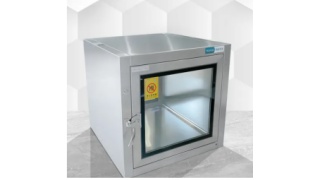
Cargo air shower | Material and equipment entry | Prevents material contamination |
Tunnel air shower | Large-scale industrial plants | High-volume operation |
Selecting the correct configuration depends on traffic volume, space constraints, and contamination risk level.
Beyond cleanliness, air showers contribute to workplace safety by:
Removing hazardous dust from clothing
Reducing cross-contamination between zones
Supporting hygienic working conditions
In pharmaceutical and chemical environments, this also protects employees from carrying hazardous substances outside controlled areas.
Modern air showers are designed to integrate seamlessly with:
Access control systems
Cleanroom door interlocks
Smart monitoring and alarm systems
Custom dimensions, airflow patterns, and materials (such as stainless steel or powder-coated steel) allow air showers to match specific industry requirements.
Across industries, we see a consistent trend: as production standards rise, entry-point contamination control becomes more critical.
Air showers are no longer viewed as optional equipment. They are:
A risk management tool
A productivity enhancer
A compliance support system
Facilities that invest in proper entry control often experience smoother operations, fewer quality issues, and stronger customer confidence.
From our experience working with industrial clients, the answer is clear: yes.
Air showers provide measurable benefits in contamination reduction, operational efficiency, and product protection. They strengthen cleanroom performance from the very first step—entry control—where contamination is most easily prevented.
At Cigeair (Shenzhen) Technology Group Co., Ltd., we focus on delivering reliable air shower solutions tailored to industrial environments. Whether you are upgrading an existing cleanroom or designing a new facility, selecting the right air shower system can make a meaningful difference in cleanliness, efficiency, and long-term operational stability.
If you are evaluating air showers for your facility or would like to explore configuration options, we welcome you to connect with us and discuss your requirements.
Q1: What industries benefit most from air showers?
Air showers are widely used in electronics manufacturing, pharmaceuticals, food processing, biotechnology, and any industry requiring controlled environments.
Q2: How effective are air showers at removing dust?
High-quality air showers remove the majority of surface particles using high-velocity, HEPA-filtered airflow, significantly reducing contamination entering cleanrooms.
Q3: Are air showers required for ISO cleanrooms?
While not always mandatory, air showers are strongly recommended for maintaining ISO Class cleanliness and supporting long-term compliance.
Q4: Can air showers handle both people and materials?
Yes. Personnel air showers and cargo air showers are designed specifically for people or materials, ensuring comprehensive contamination control.


