 EnglishEnglish


Views: 0 Author: Site Editor Publish Time: 2026-02-13 Origin: Site


In industries where cleanliness directly determines product quality, safety, and compliance, contamination control is not optional—it is foundational. From electronics manufacturing and pharmaceuticals to food processing and precision engineering, controlling airborne particles is critical at every stage of production.
From our experience working with cleanroom facilities, one truth remains consistent: most contamination enters controlled environments through people and materials. This is where the air shower becomes indispensable.
An air shower is not simply an accessory at the entrance of a cleanroom—it is an engineered system designed to actively remove contaminants before they cross the threshold. Understanding how an air shower works helps facility managers, engineers, and procurement teams make informed decisions about cleanroom design and long-term operational efficiency.
In this article, we explain how an air shower works, step by step, and why it plays such a critical role in modern contamination control strategies.
An air shower is a self-contained, enclosed chamber installed at cleanroom entrances or between zones of different cleanliness levels. Its purpose is to remove dust, fibers, and particulate contaminants from personnel or materials using high-velocity, HEPA-filtered air.
Unlike passive airlocks or gowning rooms, air showers actively dislodge and remove particles from surfaces before entry. This proactive approach significantly reduces the particle load introduced into clean environments.
Air showers are commonly used in:
Semiconductor and electronics manufacturing
Pharmaceutical and biotechnology facilities
Medical device production
Food and beverage processing plants
Aerospace and precision engineering
In cleanroom-controlled environments, human presence is the single largest source of airborne contamination. Even when personnel wear cleanroom garments, microscopic particles are continuously released through normal movement. Walking, arm motion, turning, or even standing still can generate thousands of particles per minute from clothing fibers, exposed skin, and footwear.
Without effective contamination control at entry points, these particles are carried directly into controlled zones. Once inside, they circulate through airflow systems and settle on sensitive surfaces, equipment, and products. Over time, this creates multiple operational risks:
Contaminants enter clean zones unchecked, compromising cleanliness levels
HVAC and cleanroom filtration systems become overloaded, increasing energy consumption
Cleaning frequency and labor costs rise, reducing operational efficiency
Product defects, yield loss, and rejection rates increase, especially in high-precision industries
Air showers are designed to address this problem at its source. Acting as the first active contamination barrier, an air shower removes particles from personnel or materials before they cross into the clean environment. By reducing particle load at the entrance, air showers stabilize cleanroom conditions and significantly reduce downstream contamination risks.
Rather than relying solely on internal air circulation to manage contamination, air showers prevent particles from entering in the first place—an approach that is both more effective and more economical over the long term.
The operation of an air shower follows a carefully engineered sequence designed to ensure efficiency, safety, and procedural consistency. Each step is essential to maintaining reliable contamination control.
When a person or material enters the air shower chamber:
The entry door closes automatically
A door interlock system prevents the exit door from opening
The chamber becomes a sealed environment during operation
This interlocking mechanism ensures that unfiltered air does not pass between clean and non-clean zones. It also prevents users from bypassing the air shower cycle, guaranteeing that every entry follows the same contamination-control procedure.
By enforcing a closed-loop process, the air shower eliminates variability caused by human behavior and strengthens cleanroom discipline.
Once the cycle begins:
High-speed air jets, typically operating at 20–25 m/s, are activated
Air is blown from multiple directions through strategically positioned nozzles
Jets target clothing folds, sleeves, footwear, and exposed surfaces
These high-velocity air streams are critical because many contaminants adhere to fabric surfaces and cannot be removed by low-speed airflow. The directional design of the nozzles ensures comprehensive coverage, dislodging particles from areas that are most likely to trap dust.
Compared to passive airlocks, this active removal process dramatically reduces the number of particles entering clean spaces.
Once particles are dislodged, they must be removed from the airflow entirely. This is achieved through a closed-loop filtration system.
Dislodged contaminants are drawn into return air grilles and passed through HEPA filters, which capture ≥99.99% of particles at 0.3 microns.
Component | Function |
HEPA filter | Removes fine airborne particles |
Fan system | Maintains airflow velocity and pressure |
Return air grille | Collects contaminated air |
Pre-filter (optional) | Extends HEPA filter lifespan |
After filtration, clean air is recirculated back into the chamber, maintaining high efficiency while minimizing energy loss. This recirculation design allows air showers to deliver strong performance without excessive air consumption.
Air showers operate on pre-set cycle durations, typically ranging from 10 to 30 seconds, depending on:
Cleanroom classification level
Industry and regulatory requirements
Personnel traffic volume
Timed cycles ensure consistent performance and prevent premature exit. Even short cycles can remove a significant percentage of surface contaminants when airflow velocity and nozzle placement are properly engineered.
From an operational standpoint, controlled timing balances contamination control effectiveness with workflow efficiency.
Once the cycle is completed:
Air jets shut down automatically
The exit door unlocks
The entry door remains locked until exit is complete
This final step ensures directional flow and prevents cross-contamination between zones. Automated exit authorization also reinforces procedural discipline without relying on manual supervision.
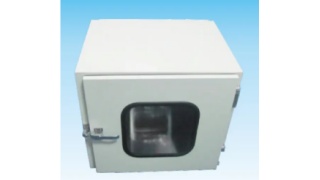
An air shower' s performance depends on the integration of multiple components working together as a system.
Component | Role in Operation |
High-speed fans | Generate required airflow velocity |
Stainless steel panels | Durable, corrosion-resistant, easy to clean |
Nozzle arrays | Ensure uniform particle removal |
HEPA filtration | Guarantees air cleanliness |
PLC / control panel | Manages timing, interlocks, and safety logic |
LED indicators | Provide user guidance and system status |
Each component must be engineered to industrial standards. Inconsistent airflow, poor filtration, or unreliable controls can significantly reduce effectiveness and compromise cleanroom performance.
Air showers are designed for both personnel entry and material transfer, but the design priorities differ.
Application | Key Design Focus |
Personnel air shower | Ergonomics, comfort, safety |
Cargo air shower | Load capacity, airflow coverage |
Trolley air shower | Wheel and underside cleaning |
Personnel air showers emphasize comfort and usability to encourage compliance, while cargo and trolley air showers focus on structural strength and comprehensive surface exposure. Selecting the correct configuration ensures effective contamination removal without disrupting workflow or logistics.
Removes surface particles before entry
Stabilizes cleanroom particle counts
Supports ISO, GMP, and FDA requirements
Reduces audit risks
Prevents invisible defects
Improves yield and consistency
Reduces HVAC load
Extends filter lifespan
Lowers rework and scrap
Enforces standardized entry procedures
Reduces reliance on manual supervision
Air showers work best as part of an integrated contamination control strategy, alongside:
Gowning protocols
Controlled airflow design
Proper zoning and pressure differentials
When implemented correctly, they become a long-term investment in stability and efficiency.
From our perspective, an air shower must deliver consistent performance over years of operation, not just pass initial testing. Attention to airflow balance, filtration quality, structural materials, and control logic is what separates reliable systems from short-term solutions.
This is why system design, customization, and manufacturing quality matter just as much as specifications on paper.
Understanding how an air shower works reveals why it is such a critical component of modern contamination control. By combining high-velocity airflow, HEPA filtration, intelligent controls, and disciplined workflow design, air showers significantly reduce contamination risks at the source.
For facilities seeking stable cleanroom performance, improved compliance, and long-term operational efficiency, air showers are not an optional add-on—they are a strategic necessity.
If you are evaluating air shower solutions or planning a cleanroom upgrade, Cigeair (Shenzhen) Technology Group Co., Ltd. can provide technical guidance and engineered systems tailored to your application needs. We focus on delivering reliable, compliant, and efficient contamination control solutions for industrial environments.
1. How does an air shower remove dust from clothing?
Air showers use high-speed, HEPA-filtered air jets to dislodge particles from clothing and surfaces, which are then captured through filtration systems.
2. How long does an air shower cycle usually take?
Most air shower cycles last between 10 and 30 seconds, depending on cleanliness requirements and facility standards.
3. Are air showers required for ISO cleanrooms?
While not mandatory in all cases, air showers are strongly recommended for ISO-classified cleanrooms to maintain stable particle levels.
4. Can air showers be customized for different industries?
Yes. Air showers can be customized for personnel, materials, or trolleys, with varying sizes, airflow patterns, and control systems.


