 EnglishEnglish


Views: 0 Author: Site Editor Publish Time: 2026-02-16 Origin: Site


In controlled environments such as cleanrooms, laboratories, pharmaceutical plants, electronics manufacturing facilities, and food processing areas, air showers are not optional accessories—they are essential contamination control systems. Understanding the real requirements for an air shower is critical for factories and project planners who want to meet cleanliness standards, improve production quality, and pass regulatory inspections smoothly.
At Cigeair (Shenzhen) Technology Group Co., Ltd., we work closely with industrial clients who integrate air showers into cleanroom systems worldwide. Based on our project experience, air shower requirements are not limited to airflow speed alone. They involve a combination of performance standards, structural design, control logic, and operational reliability.
This article explains what an air shower is required to achieve, how those requirements are defined in practice, and what factories should consider when selecting and installing an air shower system.
An air shower serves as a buffer zone between clean and non-clean areas. Its primary function is to remove dust particles, fibers, and microorganisms from personnel or materials before they enter controlled environments.
Without a properly designed air shower:
Contaminants are carried into clean zones
Product defect rates increase
Equipment contamination accelerates
Compliance audits become more difficult
For this reason, air shower requirements are directly linked to cleanroom performance and operational stability, not just equipment selection.
One of the most fundamental and performance-critical requirements for an air shower is high-velocity, uniform airflow. The primary function of an air shower is to physically remove particles from the surface of personnel clothing or material containers, and this can only be achieved through properly engineered air velocity and coverage.
Typical industrial air showers require:
Air velocity at nozzle outlets of 20–25 m/s
Uniform distribution across all nozzle points
Multi-directional airflow coverage, including front, back, and sides
This velocity range has been proven effective in dislodging dust particles, fibers, and microbial contaminants without causing excessive discomfort to operators. If airflow is too weak, particles remain attached to garments. If airflow is too aggressive or poorly distributed, turbulence can redeposit contaminants rather than remove them.
Uniform airflow is just as important as raw air velocity. Uneven airflow creates dead zones where particles are not effectively removed. These dead zones commonly occur around the lower legs, shoulders, or back if nozzle placement is poorly designed.
A well-designed air shower ensures that:
Air jets cover front, back, and side surfaces evenly
Turbulence inside the chamber is minimized
Particles are driven downward toward floor-level return air inlets
Directional airflow design, nozzle angle optimization, and balanced fan pressure all contribute to uniform particle removal. In industrial cleanroom environments, airflow uniformity directly impacts contamination control effectiveness and cleanroom classification stability.
An air shower is only as effective as its filtration system. High-efficiency filtration is a non-negotiable requirement in industrial and cleanroom applications, as removed particles must be captured and prevented from recirculating back into the environment.
Component | Requirement | Purpose |
Primary filter | Removes large particles | Protects downstream filters |
HEPA filter | ≥99.99% efficiency at 0.3 μm | Captures fine contaminants |
Filter sealing | Airtight installation | Prevents bypass leakage |
Primary filters serve as the first defense layer, removing larger dust particles and extending the service life of HEPA filters. HEPA filters are responsible for capturing fine particles that pose the greatest contamination risk in cleanrooms.
In industrial applications, HEPA filters must maintain stable performance under continuous airflow pressure. Poor filter quality, insufficient filter area, or improper sealing can lead to air bypass, significantly reducing cleaning efficiency. Even a small leakage path around a HEPA filter frame can compromise the entire air shower system.
Regular maintenance access and filter replacement design are also critical requirements to ensure long-term performance.
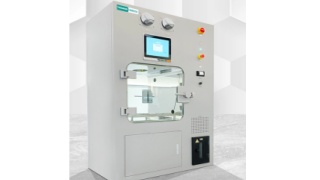
Air showers are installed in high-traffic transition zones and must withstand long-term, repeated industrial use. Structural design and material selection directly affect durability, hygiene, and system stability.
Common structural requirements include:
Cold-rolled steel with powder coating or stainless steel construction
Smooth internal surfaces to prevent dust accumulation
Corrosion-resistant finishes for pharmaceutical or food-processing environments
Structural rigidity is essential to prevent vibration, air leakage, and misalignment over time. Weak panels or poorly reinforced frames can lead to airflow loss, increased noise, and long-term maintenance issues.
Smooth interior surfaces are equally important. Rough edges, exposed fasteners, or uneven joints can trap dust and undermine the air shower' s cleaning function. For regulated industries, materials must also support routine cleaning and disinfection without surface degradation.
One of the most critical functional requirements of an air shower is a reliable door interlock system. Without proper interlocking, an air shower cannot function as an effective contamination barrier.
Air shower doors must:
Prevent both doors from opening simultaneously
Enforce a complete air shower cycle before exit
Maintain pressure separation between clean and non-clean zones
This ensures that contaminants are not carried directly from uncontrolled areas into cleanrooms.
Advanced air showers often include:
Electronic or PLC-based interlock systems
Emergency release functions for safety compliance
Visual and audible indicators showing operation status, cycle completion, or fault conditions
Interlock logic must be stable and fail-safe. In high-throughput facilities, door interlocks also regulate personnel flow, preventing misuse or cycle bypass that could compromise cleanliness standards.
Beyond contamination control, air showers must also prioritize operator safety and comfort, especially in facilities where personnel pass through them dozens of times per day. Poorly designed systems can cause discomfort, fatigue, or even minor injuries, which may reduce compliance and disrupt workflow.
Air velocity, for example, must be powerful enough to remove particles while remaining within safe exposure limits. Excessive airflow or poorly directed nozzles can cause discomfort, particularly around the face and neck. Noise levels should also be controlled to avoid long-term hearing fatigue in high-traffic environments.
Key safety-related requirements typically include:
Emergency stop buttons or manual door release mechanisms
Non-slip flooring to prevent falls during operation
Rounded internal edges and smooth surfaces to reduce injury risk
Clear visual and audible indicators that guide users through each step
A safety-focused air shower design not only protects users but also improves acceptance and consistent usage, which is critical for maintaining contamination control in busy industrial settings.
An air shower does not function as a standalone unit—it must integrate seamlessly into the broader cleanroom airflow and access control system. Proper integration ensures that the air shower strengthens, rather than disrupts, contamination control.
Key integration considerations include alignment with cleanroom pressure differentials, compatibility with modular wall and panel systems, and coordination with personnel traffic flow. Adequate clearance for filter replacement and routine maintenance is also essential.
Improper placement or airflow mismatch can compromise pressure balance and reduce overall cleanroom effectiveness. Correct integration ensures stable airflow dynamics and consistent cleanliness performance.
An air shower must integrate seamlessly with the cleanroom layout.
Key installation considerations:
Correct alignment with cleanroom pressure gradients
Sufficient space for personnel flow
Compatibility with wall panels and flooring systems
Easy access for filter replacement and maintenance
Improper installation can compromise even the best-designed air shower.
For regulated industries, air showers must support:
Cleanroom classification targets
Validation documentation
Maintenance records
Performance testing (air velocity, particle reduction)
Factories should select air shower suppliers who can provide technical drawings, specifications, and long-term support.
Air showers are not standalone products—they are part of a contamination control system.
From our perspective, effective air showers must:
Deliver consistent cleaning performance
Operate reliably under high usage
Support long-term cleanroom compliance
Adapt to different personnel and material flow needs
At Cigeair (Shenzhen) Technology Group Co., Ltd., we design air showers with these system-level requirements in mind, helping factories build cleaner, more stable production environments.
So, what are the requirements for an air shower?
They go far beyond airflow speed.
A compliant and effective air shower must meet airflow, filtration, structural, control, safety, noise, installation, and validation requirements simultaneously. When any of these elements are overlooked, contamination risks increase and operational efficiency suffers.
At Cigeair (Shenzhen) Technology Group Co., Ltd., we focus on delivering air shower solutions that meet real industrial requirements—not just theoretical specifications. If you are planning a cleanroom project or upgrading an existing facility, we welcome you to learn more about our air shower systems and discuss your application needs with our team.
Q1: What is the required air velocity for an air shower?
Most industrial air showers require nozzle air velocity between 20–25 m/s to effectively remove surface particles.
Q2: Do air showers require HEPA filters?
Yes. HEPA filtration with at least 99.99% efficiency at 0.3 μm is essential for cleanroom applications.
Q3: Why is door interlocking important in air showers?
Interlocking prevents contamination transfer by ensuring only one door opens at a time during operation.
Q4: How long should an air shower cycle last?
Typical air shower cycles range from 10 to 30 seconds, depending on cleanliness requirements and airflow design.


