 EnglishEnglish


Views: 0 Author: Site Editor Publish Time: 2026-06-09 Origin: Site


In pharmaceutical manufacturing, biotechnology laboratories, medical device production, and precision electronics industries, maintaining a contamination-free environment is critical to ensuring product quality and regulatory compliance. Even microscopic airborne particles can compromise sterile products, affect experimental results, or damage sensitive components.
A Class A Laminar Flow Hood provides a localized ISO Class 5 (Grade A) clean environment through unidirectional airflow and high-efficiency filtration. By continuously supplying HEPA-filtered air across the work area, the system minimizes particle contamination and creates stable conditions for critical operations.
Compared with upgrading an entire room to a higher cleanliness classification, a laminar flow hood offers a cost-effective and flexible solution for localized contamination control.

A Class A Laminar Flow Hood is a clean air workstation designed to create a highly controlled environment for contamination-sensitive processes. It uses a combination of high-efficiency filtration and uniform airflow distribution to maintain a localized high-cleanliness working area.
The equipment is widely used in:
Pharmaceutical manufacturing
Biotechnology research laboratories
Medical device production facilities
Electronics and semiconductor industries
Research and development laboratories
Sterile preparation and compounding applications
Modern laminar flow hoods can be configured as either suspended or floor-standing units. Their compact structure and flexible installation options make them suitable for a wide range of cleanroom environments.
The housing is typically constructed from SUS304 fingerprint-resistant stainless steel, providing excellent corrosion resistance, durability, and ease of cleaning for GMP-compliant operations.
A Class A Laminar Flow Hood consists of several critical components that work together to maintain a stable clean environment.
The system can be configured with either:
Vertical laminar airflow
Horizontal laminar airflow
Both designs provide unidirectional airflow that continuously sweeps airborne contaminants away from the work area.
High-performance centrifugal fans deliver stable airflow while maintaining:
Low vibration levels
Low operating noise
High energy efficiency
Long service life
The filtration system consists of:
A nylon mesh pre-filter captures airborne particles larger than 1 μm.
Benefits include:
Reduced HEPA filter loading
Extended filter service life
Improved filtration efficiency
The final filtration stage utilizes a gel-seal H14 HEPA filter with a filtration efficiency of 99.997% at 0.3 μm.
The gel-seal design provides:
Reliable sealing performance
Reduced leakage risk
Easier validation and maintenance
An integrated differential pressure gauge continuously monitors filter resistance with an accuracy of ±5 Pa.
This feature allows operators to:
Monitor filter performance
Detect filter blockage
Schedule timely maintenance
The control panel typically includes:
Fan start/stop controls
Frequency converter control
Airflow adjustment functions
System status monitoring
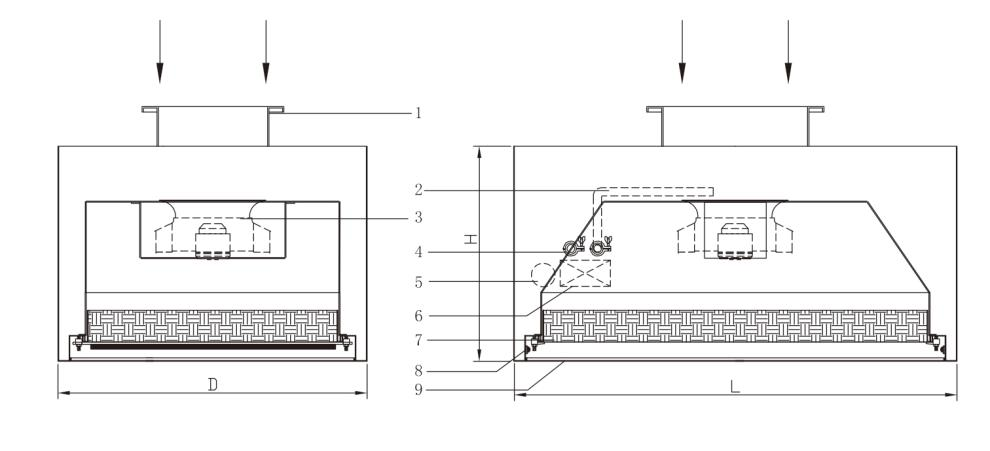
The operating principle is based on multi-stage air purification and uniform airflow distribution.
Ambient air first passes through the pre-filter, where larger dust particles are removed.
This process protects the HEPA filter and improves overall system efficiency.
The pre-filtered air is forced through the H14 HEPA filter by the centrifugal fan.
The HEPA filter removes microscopic contaminants and provides highly purified air suitable for Class A cleanroom applications.
The purified air passes through a 200-mesh airflow distribution membrane, ensuring:
Uniform airflow velocity
Reduced turbulence
Consistent contamination control
The clean air is then delivered evenly across the working area, creating a stable localized clean environment.
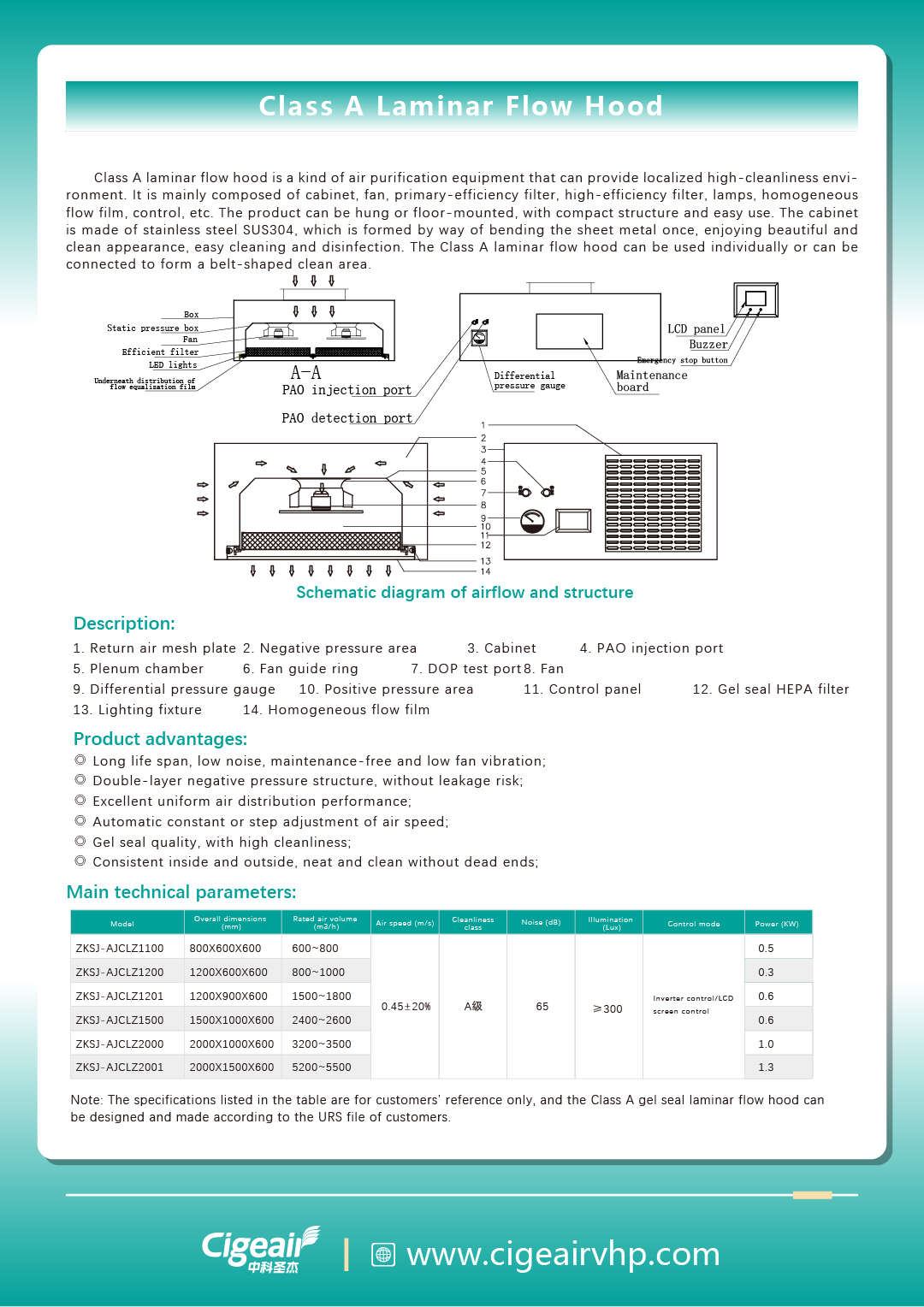
Proper installation is essential for maintaining filtration efficiency and long-term reliability.
Recommended environmental conditions include:
Parameter Requirement
Power Supply 220V / 50Hz
Temperature 10°C – 35°C
Relative Humidity 40% – 70% RH
Environment Clean, Low-Dust Area
Install away from heat sources
Avoid corrosive environments
Prevent exposure to flammable chemicals
Ensure stable electrical connections
Secure all mounting components
Maintain adequate airflow around the equipment
Failure to follow installation requirements may reduce system performance and shorten equipment lifespan.
Before commissioning, several verification procedures should be completed.
Operators should verify:
Complete installation of all components
Proper electrical connections
Stable power supply
Unobstructed air intake openings
After startup:
Check airflow output
Verify stable operation
Inspect for abnormal vibration
Listen for unusual noise
Any abnormalities should be corrected before production use.
HEPA filter integrity should be verified using a PAO aerosol challenge test.
Testing equipment includes:
Aerosol generator
PAO photometer
Acceptance criteria:
Leakage rate below 0.01%
This test confirms that the filter media and sealing system are functioning properly.
Airflow velocity should be measured 100–150 mm below the airflow distribution membrane.
Recommended average velocity:
0.45 m/s ±20%
Consistent airflow velocity is critical for maintaining Class A cleanliness performance.
To maintain optimal performance:
✔ Keep return air pathways unobstructed
✔ Inspect pressure readings regularly
✔ Maintain clean working surfaces
✔ Verify airflow performance before operation
✔ Turn off the unit when not in use
✘ Direct compressed air cleaning on HEPA filters
✘ Cleaning with aggressive chemical solvents
✘ Blocking airflow pathways
✘ Unauthorized equipment modifications
For units equipped with UV lamps, operators should avoid direct exposure to ultraviolet radiation.
Preventive maintenance helps maximize equipment lifespan and maintain stable performance.
Regularly inspect for:
Abnormal vibration
Bearing noise
Excessive heat generation
Wiring damage
Check for:
Dust accumulation
Physical damage
Deformation
Replace the pre-filter when airflow performance begins to decline.
Monitor differential pressure readings regularly.
Recommended final resistance:
400–450 Pa
When resistance reaches this range, HEPA filter replacement should be scheduled.
Inspect:
Terminal connections
Wiring insulation
Corrosion
Control panel operation
Possible causes:
Power interruption
Wiring damage
Control system malfunction
Solutions:
Verify power supply
Inspect electrical connections
Contact qualified service personnel
Possible causes:
Damaged HEPA filter
Loose filter installation
Seal leakage
Solutions:
Perform PAO testing
Tighten filter installation
Replace HEPA filter if necessary
Possible causes:
Fan malfunction
Blocked pre-filter
HEPA filter blockage
Solutions:
Verify fan operation
Replace pre-filter
Replace HEPA filter
A standard replacement procedure includes:
Shut down the equipment.
Clean the work area.
Remove the existing filter.
Inspect the replacement filter.
Install the new filter.
Perform integrity testing.
Verify airflow velocity.
Resume operation.
After replacement, a PAO leak test should always be conducted to verify filtration performance.
Provides ISO Class 5 / Grade A clean environment
H14 HEPA filtration efficiency of 99.997% at 0.3 μm
Continuous particle contamination control
Supports GMP compliance requirements
Improves product quality consistency
Reduces contamination-related risks
Cost-effective cleanroom contamination control solution
Suitable for pharmaceutical, biotechnology, medical device, and electronics industries
How often should a HEPA filter be replaced?
Replacement frequency depends on operating conditions and differential pressure readings. Most facilities replace filters when resistance reaches 400–450 Pa.
What airflow velocity is recommended?
The recommended airflow velocity is 0.45 m/s ±20%.
Can a laminar flow hood be used in GMP facilities?
Yes. Class A Laminar Flow Hoods are widely used in GMP pharmaceutical production and sterile manufacturing environments.
Why is differential pressure monitoring important?
It helps operators assess filter loading conditions and determine when maintenance or replacement is required.
Which industries commonly use laminar flow hoods?
Pharmaceuticals
Biotechnology
Medical devices
Electronics manufacturing
Research laboratories
Why Choose Cigeair Laminar Flow Hoods?
Cigeair specializes in cleanroom contamination-control equipment for pharmaceutical, biotechnology, medical device, and laboratory applications.
Our Class A Laminar Flow Hoods feature:
H14 HEPA filtration systems
Stable laminar airflow performance
GMP-compliant construction
Customizable dimensions and configurations
Reliable validation support
Global project experience
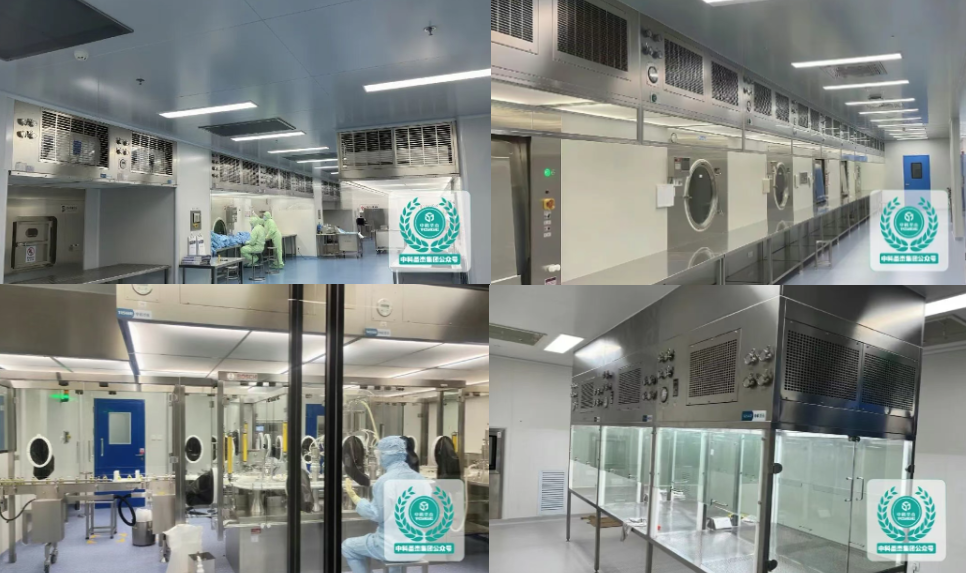
Looking for a reliable Class A Laminar Flow Hood solution for your cleanroom project?
Cigeair provides customized clean air systems designed to meet the strict requirements of pharmaceutical manufacturing, biotechnology research, medical device production, and other contamination-sensitive applications.
Contact our engineering team today to discuss your project requirements and receive professional technical support.


