EnglishEnglish


Views: 0 Author: Site Editor Publish Time: 2026-06-11 Origin: Site



In pharmaceutical manufacturing, medical facilities, electronics production, and food processing, clean and controlled air is essential for maintaining product quality, operational safety, and regulatory compliance. Even microscopic airborne contaminants can compromise sterile medicines, damage semiconductor components, or affect food safety standards.
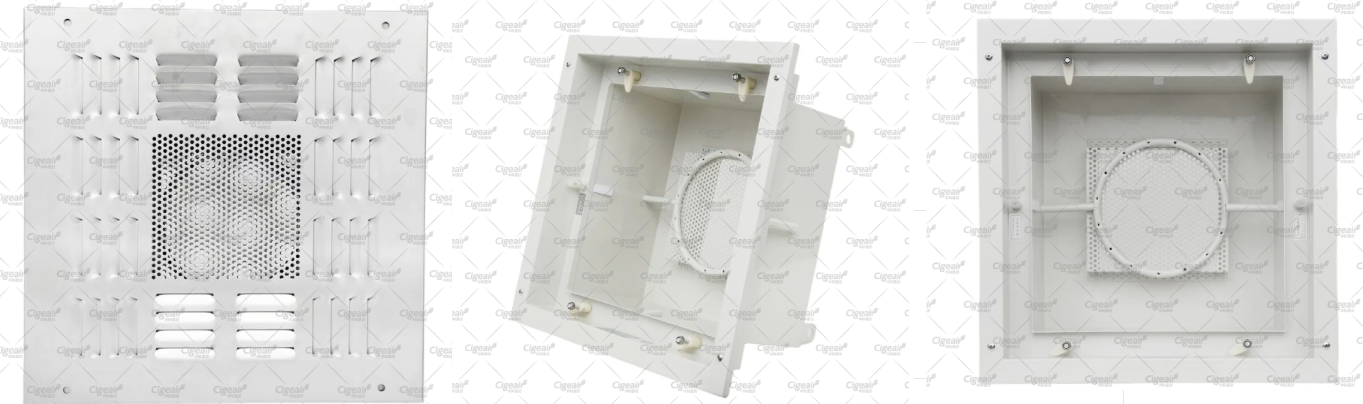
A high-efficiency supply air outlet serves as the final air distribution terminal in a cleanroom HVAC system. Equipped with a HEPA or ULPA filter, it delivers purified air directly into critical environments while maintaining stable airflow patterns and minimizing contamination risks.
Modern gel-seal high-efficiency supply air outlets have become the preferred solution for pharmaceutical plants, hospitals, semiconductor factories, biological laboratories, and other contamination-sensitive facilities.
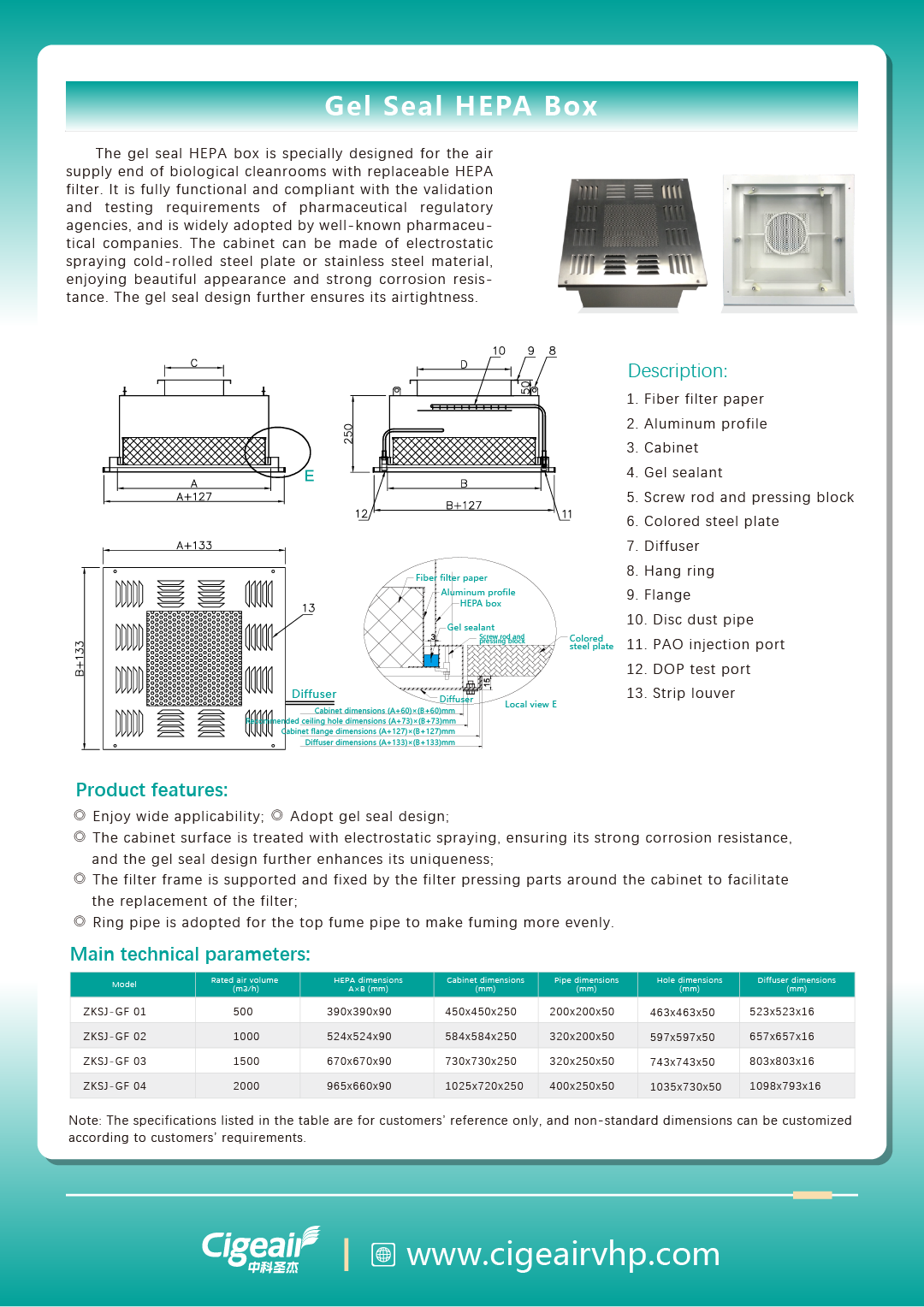
A high-efficiency supply air outlet is a terminal air distribution device designed to provide clean, filtered air into controlled environments.
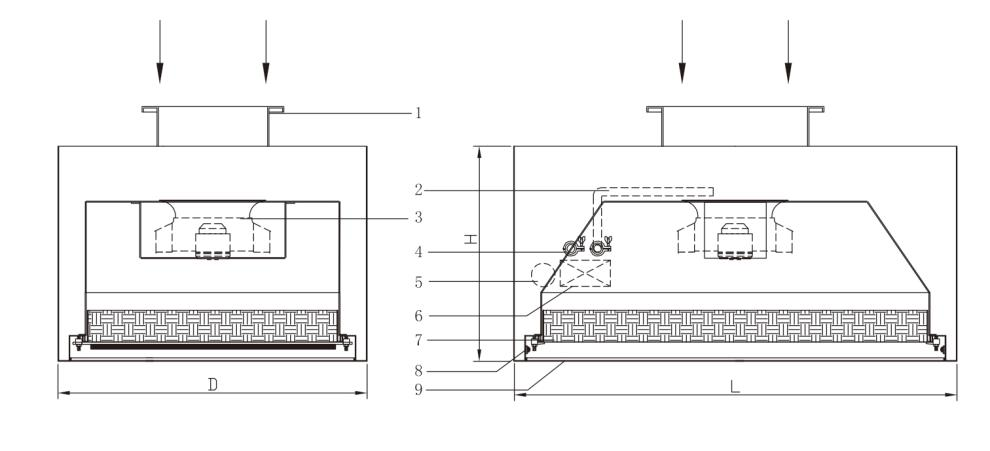
The system combines HEPA or ULPA filtration, static pressure equalization, airflow diffusion, and airtight sealing technology. These components work together to ensure that clean air enters the room uniformly and without leakage.
Modern gel-seal HEPA supply air outlets are specifically designed to meet GMP, ISO 14644, and hospital cleanroom requirements while supporting validation and testing procedures.
HEPA / ULPA Filter
The filtration system is the most important component of the supply air outlet.
HEPA filters can remove 99.97% or more of particles at 0.3 μm.
ULPA filters can remove 99.999% or more of particles at 0.12 μm.
Available filter options include separator-type filters, separator-less filters, and gel-seal filters.
For pharmaceutical and biosafety applications, gel-seal filters are generally preferred because they offer superior sealing performance and minimal leakage risk.
Plenum Box
The plenum box functions as an airflow buffering chamber.
Primary functions:
Stabilizing airflow pressure
Reducing turbulence
Extending filter service life
Improving airflow distribution uniformity
Common housing materials include powder-coated steel and SUS304 stainless steel.
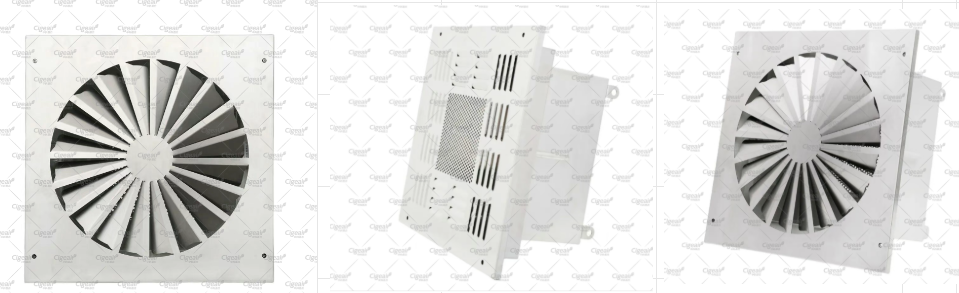
Diffuser Plate
The diffuser plate distributes filtered air evenly into the room.
Common diffuser styles include perforated plates, louver diffusers, and swirl diffusers.
A properly designed diffuser eliminates airflow dead zones and helps maintain uniform cleanliness levels throughout the controlled environment.
Sealing Structure
The sealing structure prevents unfiltered air from bypassing the filter.
Common sealing methods include dry seal, wet seal, and gel seal.
Gel-seal technology provides the highest level of airtightness and is widely used in GMP pharmaceutical facilities and hospital operating rooms.
High-Efficiency Filtration Performance
The integrated HEPA or ULPA filter captures airborne contaminants before they enter the cleanroom.
This helps facilities maintain ISO cleanliness classifications, GMP compliance, and product quality standards.
Uniform Air Distribution
The combination of the plenum box and diffuser plate ensures consistent airflow across the protected area.
Benefits:
Reduced turbulence
Improved contamination control
Elimination of airflow dead zones
Energy Efficiency and Low Noise
Optimized airflow paths reduce pressure loss and energy consumption.
Many modern designs achieve operating noise levels below 50 dB(A), while specialized configurations can operate at approximately 35 dB(A).
Easy Maintenance
Replaceable filter designs allow operators to change filters independently, reducing maintenance costs and minimizing downtime.
Pharmaceutical Industry
Used in aseptic filling rooms, sterile manufacturing areas, dry heat sterilization zones, and vaccine production facilities.
Strict GMP compliance and high-level contamination control are required.
Medical Facilities
Common applications: operating rooms, intensive care units, isolation wards, biological laboratories.
Gel-seal H13/H14 HEPA outlets help reduce airborne infection risks and maintain sterile conditions.
Electronics and Semiconductor Manufacturing
Applications: semiconductor fabrication, optical component manufacturing, precision electronics assembly.
ULPA filtration is often selected to protect highly sensitive components.
Food Processing Industry
Applications: dairy production facilities, bakery processing areas, aseptic packaging lines.
HEPA filtration minimizes microbial contamination and supports food safety compliance.
Cleanliness Requirements
ISO Class 5–7 environments: ULPA or H14 HEPA filtration
ISO Class 8 environments: HEPA filtration
Installation Conditions
Low ceilings → ultra-thin design
Renovation projects → side-inlet configuration
New facilities → top-inlet configuration
Airflow Requirements
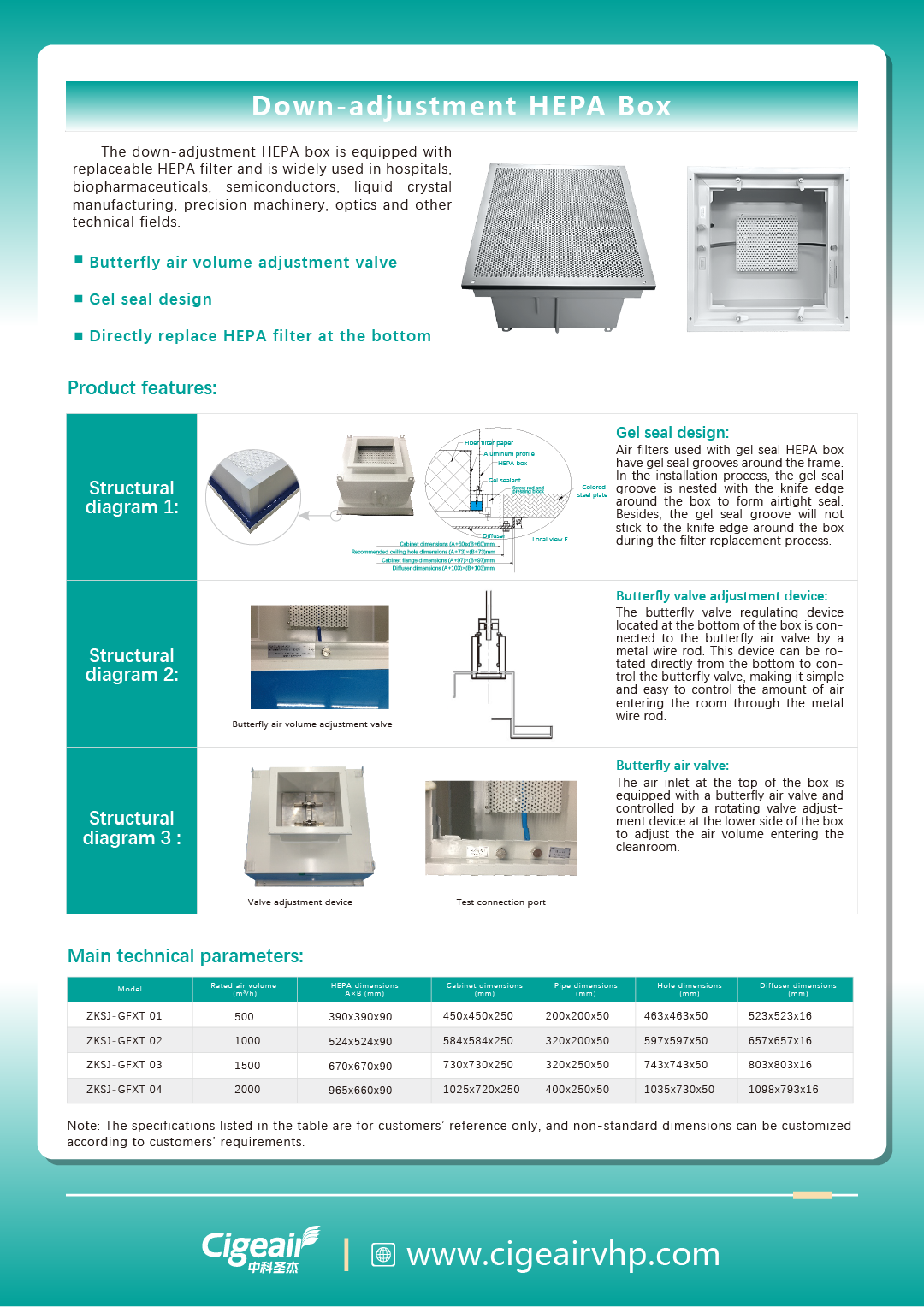
Common airflow capacities: 500 m³/h, 1000 m³/h, 1500 m³/h
Selection based on room dimensions and required air change rates.
Material Selection
Pharmaceutical/humid environments: SUS304 or SUS316 stainless steel
General industrial applications: powder-coated steel
Maintenance Best Practices
Routine maintenance ensures long-term performance and compliance.
Weekly differential pressure inspections
Monthly surface cleaning
Scheduled HEPA filter replacement
Regular gasket inspections
Periodic plenum chamber cleaning
Filters generally replaced when final resistance reaches ~2× initial resistance.
Q: What is the difference between HEPA and ULPA filters?
A: HEPA filters remove 99.97% of particles at 0.3 μm, while ULPA filters remove 99.999% of particles at 0.12 μm.
Q: Why is a gel-seal design important?
A: Gel-seal technology minimizes leakage and ensures all supplied air passes through the filter.
Q: How often should filters be replaced?
A: Typically every 6–12 months, depending on operating conditions.
Q: Which industries use high-efficiency supply air outlets?
A: Pharmaceuticals, healthcare, biotechnology, semiconductor manufacturing, food processing.
Cigeair provides advanced cleanroom air distribution solutions for pharmaceutical, medical, semiconductor, and food production facilities.
Key features:
HEPA and ULPA filtration options
Gel-seal airtight design
GMP-compliant construction
Stainless steel housing options
Validation-ready configurations
Custom dimensions and airflow capacities
Looking for a reliable high-efficiency supply air outlet for your cleanroom project?
Cigeair offers customized cleanroom air terminal solutions meeting ISO 14644 and GMP requirements while providing stable, energy-efficient, and contamination-free airflow.
Contact us today to discuss your project requirements and receive a customized cleanroom air distribution solution.