 EnglishEnglish


Views: 0 Author: Site Editor Publish Time: 2026-03-02 Origin: Site



In environments with extremely stringent requirements, such as semiconductor manufacturing cleanrooms and biosafety laboratories, a single tiny airborne particle or a wisp of harmful aerosol can lead to product scrapping, experimental contamination, or even personnel safety risks. Combining the JG/T 497-2016 "Exhaust High-Efficiency Filtration Unit" industry standard issued by the Ministry of Housing and Urban-Rural Development, let's discuss high-efficiency exhaust housings.

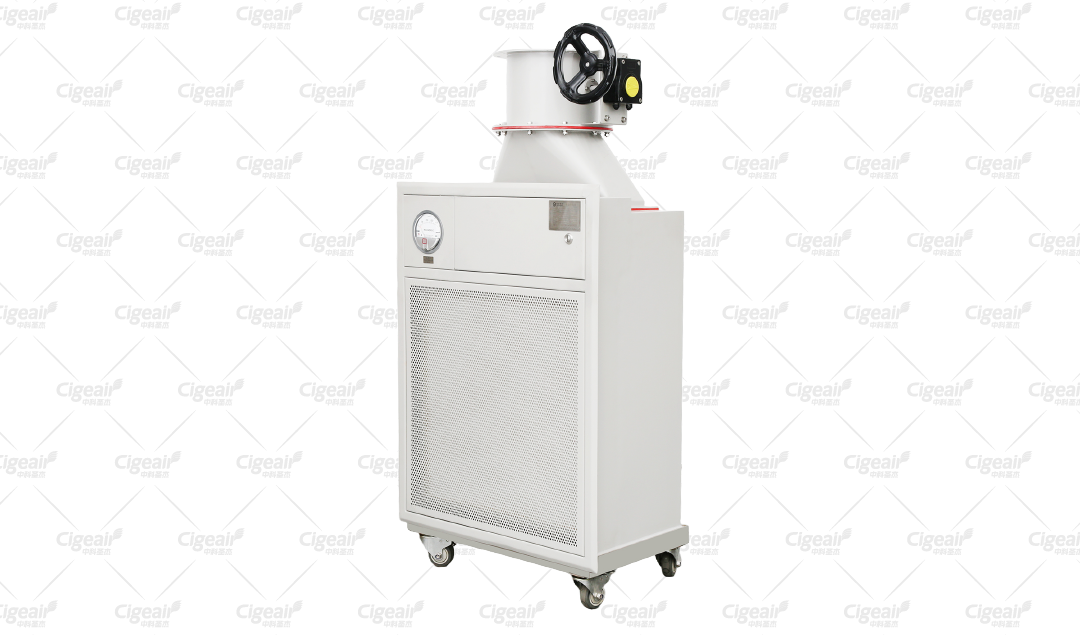
A high-efficiency return air housing, also known as a high-efficiency exhaust housing, is a high-efficiency filtration device installed in the exhaust section of a cleanroom. It is primarily used in pharmaceuticals, food processing, biological laboratories, hospitals, and other fields. It consists of a housing, a high-efficiency particulate air (HEPA) filter, a return/exhaust grille panel, and other components.
I. What is a High-Efficiency Exhaust Housing?
The High-Efficiency Filtration Device in the Exhaust Section
According to the definition in the JG/T 497-2016 standard, an Exhaust High-Efficiency Filtration Unit (commonly referred to as a high-efficiency exhaust housing) is a filtration device specifically designed for environments with specific biological risks. Its core purpose is to remove harmful biological aerosols from the exhaust air, and it must possess in-place disinfection and leak testing capabilities.

Through precise airflow control and a multi-layer filtration system, the high-efficiency exhaust housing effectively captures pollutants such as harmful particles and biological agents from the work area, then discharges the purified air.
II. JG/T 497-2016 Standard Requirements
Application Scenarios, Materials, Filtration Efficiency
1. Scope of Application: Precisely Focusing on High-Risk Scenarios
The standard explicitly states that its applicable objects are exhaust high-efficiency filtration units used in facilities with biosafety protection level 3 and above. Units for similar purposes may also refer to this standard for implementation, but it is not applicable to filtration devices for removing radioactive aerosols. This means that when handling exhaust air from P3/P4 level laboratories, such as those conducting experiments with highly pathogenic microorganisms, high-efficiency exhaust housings must strictly comply with the requirements of this standard to ensure protective efficacy.
2. Materials and Structure: Building a Safety Defense from the Source
The standard imposes strict requirements on the material selection for high-efficiency exhaust housings: the filter media must be made of materials that comply with national environmental standards and possess good chemical stability, and must not produce harmful substances or odors. Furthermore, there are clear specifications for the physical properties of the equipment, such as the strength of the filter frame and sealing performance. (For example, when handling exhaust air containing corrosive gases, the housing must be made of stainless steel or coated with Teflon to avoid leakage risks caused by material corrosion. This strict control at the material level is the foundation for the high-efficiency exhaust housing to achieve safety protection.)
3. Core Performance: Dual Compliance in Filtration Efficiency and Safety Assurance
Filtration efficiency is the core performance indicator of a high-efficiency exhaust housing and a key focus of the standard's specifications. The standard clearly requires that the high-efficiency particulate air (HEPA) filters used in high-efficiency exhaust housings must comply with the provisions of the GB/T 13554 standard. The filtration grades cover multiple levels from H10 to U17, with different levels corresponding to different minimum filtration efficiency requirements at the Most Penetrating Particle Size (MPPS).
4. Inspection Rules: Multiple Checks, Only "Qualified" Products Can Be Put into Service
To ensure product quality, the standard establishes strict inspection rules. Before leaving the factory, high-efficiency exhaust housings must undergo multiple inspections, including appearance checks, filtration efficiency tests, resistance tests, and sealing performance tests. Among these, the filtration efficiency test must be conducted using representative test dust under specified airflow velocity, temperature, and humidity conditions. The pressure drop test requires recording the pressure difference between the device's inlet and outlet at a specific flow rate. Only after all performance indicators meet the standard requirements can the product be labeled as qualified and leave the factory.

III. Application Scenarios for High-Efficiency Exhaust Housings
Semiconductors, Pharmaceuticals, Precision Manufacturing
1. Semiconductor and Microelectronics Manufacturing
Application Scenarios: Wafer photolithography, etching, packaging and testing workshops (ISO Class 3-5 cleanrooms), primarily handling photoresist mist, corrosive gases, and ultra-fine dust particles ≥0.1μm.
Technical Requirements: Selection of ULPA filters (U15 grade and above), exhaust air volume fluctuation ≤±5%, maintenance of a negative pressure differential ≥10Pa between the cleanroom and adjacent areas; housing material selection of corrosion-resistant stainless steel, filter units utilizing PTFE filter media to enhance energy efficiency and stability.
2. Biopharmaceuticals and Medical Fields
Application Scenarios: GMP pharmaceutical workshops (aseptic preparations, biological products), biosafety laboratories (BSL-2 to BSL-3), hospital Class 100 (ISO Class 5) clean operating rooms.
Technical Requirements: Biosafety laboratories require HEPA H14 grade filters, maintaining an indoor negative pressure differential ≥15Pa, equipped with PAO leak testing ports; exhaust housings for pharmaceutical workshops must possess chemical corrosion resistance, with filter unit replacement cycles not exceeding 12 months; exhaust housings for operating rooms must control operational noise ≤55dB(A) (measured 1 meter from the equipment) to avoid interference with surgical procedures.

3. Precision Manufacturing and Food Processing Fields
Application Scenarios: Precision instrument assembly workshops (ISO Class 6-7), high-end food/health product GMP workshops (ISO Class 8-9).
Technical Requirements: Precision manufacturing workshops require HEPA H13 grade exhaust housings, controlling exhaust air volume to ensure air change rates ≥25 times/h; food processing workshops require odor-resistant exhaust housings, equipped with a medium-efficiency + HEPA filter combination, maintaining a slightly positive indoor pressure (+3Pa to +5Pa) to prevent intrusion of external contaminants and ensure food hygiene and safety.
IV. Cigeair's High-Efficiency Exhaust Housings
Technical Features and Product Advantages
【Technical Features】
nHousing constructed with seamless full welding, ensuring excellent airtightness;
nVarious styles of return/exhaust grille panels available for selection:
nFully perforated panel, louvered panel, perforated diffuser panel;
nReturn/exhaust panels are easy to disassemble, featuring a concealed installation method for aesthetic appeal and easy cleaning;
nDifferential pressure gauge for real-time monitoring of HEPA filter resistance;
nIn-place automatic scan leak testing and in-place online disinfection capabilities;
nOptional accessories include UV germicidal lamps, air volume control dampers, automatic scanning devices, etc.;
nFilter efficiency grade can be selected according to indoor cleanliness requirements.


【Product Advantages】
Constructed from stainless steel material, resistant to acid and alkali corrosion, with standard pressure resistance of 2.5Kpa;
Housing features seamless full welding, ensuring excellent airtightness;
Tested under 1Kpa pressure, leakage rate is less than 0.1%, meeting national standard requirements;
Differential pressure gauge enables real-time monitoring of HEPA filter resistance;
Capable of in-place automatic scan leak testing and in-place online disinfection;
Optional accessories include disinfection ports, air volume control dampers, automatic scanning devices, etc.;
HEPA filter efficiency is 99.95%, and special filters such as chemical filters can also be equipped according to indoor air quality requirements.


