 EnglishEnglish


Views: 0 Author: Site Editor Publish Time: 2026-04-02 Origin: Site


Efficient material transfer is essential for maintaining cleanroom integrity in pharmaceutical manufacturing, biotechnology laboratories, hospitals, electronics production, and food processing facilities. Frequent opening of cleanroom doors can disturb airflow, increase airborne particle levels, and introduce contaminants into controlled environments.
A Clean Pass Box provides a safe and efficient solution for transferring small materials between cleanrooms or between clean and non-clean areas while minimizing the need for personnel movement. By combining interlocking doors, UV sterilization, and high-sealing construction, the equipment helps maintain cleanroom cleanliness and significantly reduces the risk of cross-contamination.
Designed for reliable daily operation, the Clean Pass Box has become an indispensable component of modern cleanroom contamination control systems.
A Clean Pass Box is a cleanroom transfer device designed to safely move tools, samples, documents, and other small materials between different controlled areas without compromising environmental cleanliness.
Instead of opening cleanroom doors repeatedly, operators transfer materials through the pass box, maintaining pressure balance and reducing airborne contamination.
The equipment is widely used wherever contamination control is critical, including pharmaceutical production, hospitals, biological laboratories, electronics manufacturing, and food processing facilities.
The Clean Pass Box isolates two adjacent rooms through a double-door interlocking system. During operation, only one door can be opened at a time, effectively preventing direct airflow exchange between different areas.
Before materials are transferred, the built-in UV sterilization system can be activated to disinfect item surfaces, reducing microbial contamination risks.
The high-sealing cabinet structure further minimizes air leakage, ensuring that pressure differentials between clean and non-clean areas remain stable throughout the transfer process.
This combination of physical isolation and surface sterilization provides an efficient and reliable contamination control solution.
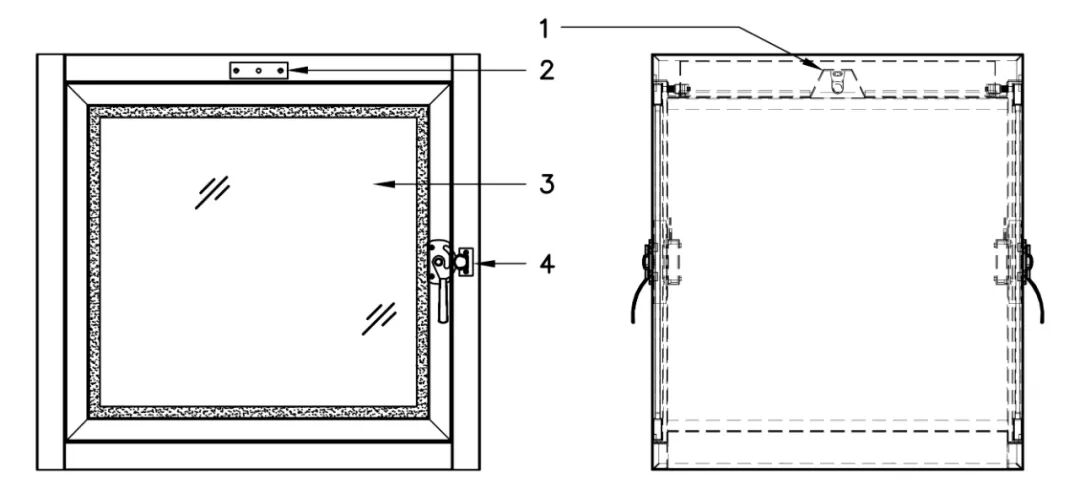
The electronic interlocking mechanism ensures that the two doors cannot be opened simultaneously.
Benefits include:
• Prevention of cross-contamination
• Stable cleanroom pressure
• Improved transfer safety
• Standardized operating procedures
This design effectively separates clean and non-clean environments during material transfer.
The built-in UV sterilizer provides surface disinfection before materials enter the clean area.
Advantages include:
• Reduced microbial contamination
• Independent UV control
• Easy operation
• Improved material cleanliness
The UV lamp can be switched on and off independently according to operational requirements.
The cabinet adopts an inner and outer housing design with rounded internal corners.
Key benefits include:
• Smooth, gap-free construction
• Excellent sealing performance
• Easy cleaning and maintenance
• Reduced contamination accumulation
The rounded interior eliminates dead corners where dust or microorganisms could collect.
The double-layer tempered glass doors provide excellent visibility during material transfer while maintaining structural strength.
Combined with stainless steel handles, the design offers:
• Safe operation
• Long service life
• Easy observation
• Attractive appearance
A centralized control panel simplifies equipment operation and allows users to control UV sterilization and other functions conveniently.
Optional paging intercom systems improve communication between operators on both sides of the pass box, enhancing workflow efficiency.
The Clean Pass Box is suitable for a wide range of contamination-controlled environments.
Pharmaceutical Manufacturing
Used for transferring raw materials, production tools, packaging components, and laboratory samples while maintaining GMP cleanroom integrity.
Biotechnology Laboratories
Supports safe movement of laboratory supplies, biological samples, and testing equipment between controlled laboratory areas.
Hospitals and Healthcare Facilities
Commonly installed in operating rooms, sterile supply departments, pharmacies, and laboratory facilities to reduce contamination during material transfer.
Electronics Manufacturing
Protects sensitive electronic components from dust contamination during movement between production areas.
Food Processing Industry
Helps maintain hygienic production environments by minimizing contamination risks during ingredient and equipment transfer.
Compared with traditional manual transfer methods, the Clean Pass Box provides several significant advantages.
• Reduces cleanroom door opening frequency
• Minimizes airborne contamination
• Maintains pressure differentials
• Improves material transfer efficiency
• Supports GMP cleanroom management
• Easy cleaning and maintenance
• Reliable double-door interlocking protection
• Stable long-term performance
Its compact structure also makes installation convenient without occupying excessive production space.
Cigeair provides high-quality cleanroom transfer solutions designed to meet the contamination control requirements of pharmaceutical, healthcare, biotechnology, electronics, and food industries.
Our Clean Pass Boxes feature:
• Reliable interlocking systems
• High-sealing cabinet construction
• Integrated UV sterilization
• Durable stainless steel components
• Easy-to-operate control systems
• Customizable dimensions and configurations
• Stable performance with low maintenance requirements
Each unit is designed to improve transfer efficiency while maintaining cleanroom cleanliness and operational safety.

Looking for a reliable material transfer solution for your cleanroom?
Cigeair offers customized Clean Pass Box solutions designed for pharmaceutical plants, laboratories, hospitals, electronics manufacturing, and other contamination-controlled environments.
Contact our technical team today to learn more about our cleanroom transfer equipment and receive a solution tailored to your project requirements.


