 EnglishEnglish


Views: 0 Author: Site Editor Publish Time: 2026-01-05 Origin: Site


You must keep your cleanroom safe and clean. If you cannot use an autoclave, a vhp pass box helps you move things like plastic, rubber, or electronics. This keeps everything sterile. Many things cannot handle high heat. The vhp pass box uses vaporized hydrogen peroxide. It works in four steps to kill germs. You see this used for pre-filled syringes and delicate devices.
Method | Description |
|---|---|
Gaseous sterilization | Good for items that cannot take heat, like plastic and rubber. |
Ethylene oxide | Used for things like pre-filled syringes, vials, or cartridges. |
Hydrogen peroxide | Works for devices and electronics that are sensitive to heat. |
A vhp pass box gives you a safe way to move sterile items into your cleanroom.
A VHP pass box uses vaporized hydrogen peroxide. It sterilizes items that cannot handle high heat. This keeps transfers into cleanrooms safe.
Always look at the VHP pass box for damage. Check the airflow before you use it. This helps keep the area sterile and stops contamination.
Follow the four-step VHP sterilization cycle closely. The steps are dehumidification, conditioning, decontamination, and aeration. These steps help remove germs.
Use biological and chemical indicators to check if sterilization worked. This makes sure all items have no harmful germs before going into the cleanroom.
Keep good records of each sterilization cycle and cleaning process. This helps follow cleanroom rules and keeps everyone safe.
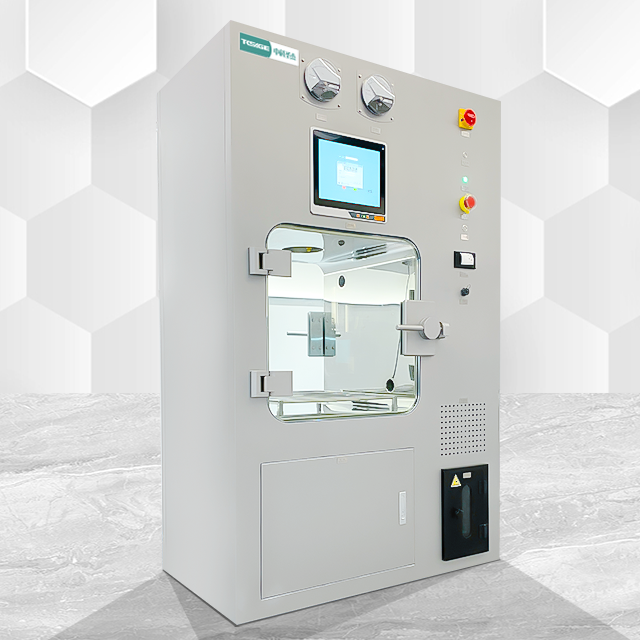
Check the vhp pass-through chambers before you use them. Make sure the chamber doors close all the way. Look for cracks or damage on the doors. This helps keep cleanroom air safe. Check the airflow system next. The air should move one way to stop germs. Use a HEPA filter integrity test. This test uses an aerosol photometer tool. The filter should not leak more than 0.01%. You can use a particle counter to look for dust. If you find too much dust, clean the chamber again.
Tip: Always use your cleanroom checklist for these steps. This keeps your work safe and easy to repeat.
Validation Phase | Key Activities | Frequency |
|---|---|---|
Installation Qualification | Check installation, connections, and documents | When installed or changed |
Operational Qualification | Test VHP, temperature, and pressure | Yearly or after repairs |
Performance Qualification | Run tests to check if cycles work well | Twice a year or after changes |
Routine Monitoring | Use test strips and check results | Weekly or monthly, as needed |
Get items ready that cannot go in an autoclave. These are things like plastics, rubber, and electronics. Put each item in a clean tray. Wipe the outside with a sterile cloth. Do not put too many items in the vhp pass-through chambers. Too many things can block air and VHP. Always check if your items are safe for VHP. Some materials can break down if they do not work with VHP. This step keeps your items and cleanroom safe.
Check the cleanroom before you start moving items. The temperature and humidity must be in the right range. High humidity can make VHP not work well. Look at your cleanroom log to see if the room is ready. Make sure no one is near the vhp pass-through chambers during the cycle. This keeps people safe. Good records and checks help you follow rules and keep the cleanroom safe.
Note: Rules say you must keep good records and follow strict steps. This helps prove your cleanroom is safe and works well.
The vhp sterilization process has four main steps. Each step helps keep items in your cleanroom safe. Vaporized hydrogen peroxide is used to kill germs. You must follow every step for good results and safety.
Phase | Duration |
|---|---|
Dehumidification | 30-60 minutes |
Conditioning | 15-30 minutes |
Decontamination | 2-4 hours |
Aeration | 1-2 hours |
First, you lower the humidity in the pass box. The humidity should be between 10% and 30%. Some systems set it at 20%. Others go as low as 12%. The system moves air in a loop to take out moisture. This helps the hydrogen peroxide vapor spread everywhere.
The best humidity for vhp decontamination is 10% to 30%.
Many systems use 20% as the highest setting.
Some cycles use 12% for top results.
Next, the system keeps the humidity low. It gets the chamber ready for the next step. You need to check the temperature and airflow. This makes sure everything stays steady. Good conditioning helps the vapor reach all surfaces. This step is important for safety and success.
Tip: Always check humidity and temperature before starting the vhp cycle. This helps you avoid problems later.
Now, you start the main part of the process. The system puts vaporized hydrogen peroxide into the pass box. The vapor covers all surfaces and kills germs. You need to keep the concentration between 100 and 1500 ppm. Most systems use 30% to 35% hydrogen peroxide by weight. This range works best for killing germs.
Factor | Optimal Range | Impact on Efficacy |
|---|---|---|
H₂O₂ Concentration | 100-1500 ppm | Helps kill germs |
H₂O₂ Concentration | 30-35% w/w | Good range for strong results |
The vapor breaks down cell walls of bacteria and viruses. This kills even tough germs. You must make sure the vapor reaches every part of the chamber. If the vapor does not spread evenly, some germs may survive. Good airflow and loading help stop this problem.
Note: If you put too many items or block airflow, the vapor may not reach all surfaces. This can cause poor decontamination.
The vapor stays in the chamber for 2 to 4 hours. This time lets the vapor kill all germs. You need to watch the process closely for safety. Real-time monitors check vapor concentration, temperature, and humidity. These tools help keep everything safe.
Biological indicators (BIs) help check if sterilization worked.
BIs use hard-to-kill spores. If spores do not grow after the cycle, you know it worked.
Checking every load with BIs is common for safety.
Biological Indicator Type | Organism | Population | d-value (minutes) |
|---|---|---|---|
Bacillus atrophaeus ATCC 9372 | Stainless steel disks | 2.2 × 10^6 | 0.7 |
Geobacillus stearothermophilus ATCC 12980 | Stainless steel disks with Tyvek | 2.0 × 10^6 | 1.7 |
Geobacillus stearothermophilus ATCC 12980 | Stainless steel strips | 1.9 × 10^6 | 2.4 |

You may have problems during the vhp process. Sometimes the vapor does not spread evenly. The cycle can stop early. Vapor levels can change too much. Problems can also happen if the exhaust system does not work right.
Issue | Description |
|---|---|
Uneven H2O2 vapor distribution | You need good airflow to spread vapor everywhere. |
Premature cycle aborts | Stopping early wastes time and can leave germs. |
Fluctuating H2O2 levels | Keeping levels steady is important for killing germs. |
Aeration phase problems | Bad air exchange or broken exhaust can cause trouble. |
Always check monitors and biological indicators to keep things safe. This helps you follow cleanroom rules and protect your team. The vhp process uses advanced technology for strong results. You can trust vaporized hydrogen peroxide to sterilize items that cannot go in an autoclave. This process also works with other cleanroom sterilization methods.
Safety reminder: Always follow cleanroom safety rules when using hydrogen peroxide vapor. Wear protective gear and check monitors before, during, and after the process.
The vhp process is a strong way to keep your cleanroom safe. Vaporized hydrogen peroxide kills germs and protects your work. This technology helps you meet strict rules and keeps your team safe. You can use it with other methods for the best results. When done right, this process gives you peace of mind and keeps your cleanroom ready. Vaporized hydrogen peroxide is a trusted tool for modern cleanrooms.

When the sterilization cycle ends, you start aeration. This step takes out any leftover vaporized hydrogen peroxide from the pass box. It helps keep your cleanroom and team safe by making sure the air is clean. Aeration usually takes 15 to 45 minutes. The time depends on how big the chamber is and how good the ventilation works. Always check safety features before you open the chamber. Monitors tell you the vapor levels inside. OSHA says the safe amount of vaporized hydrogen peroxide is 1 ppm for an 8-hour shift. If the level goes over 75 ppm, it is very dangerous right away.
Aeration phase takes 15 to 45 minutes.
The time changes with chamber size and ventilation.
OSHA says 1 ppm is the safe limit for vaporized hydrogen peroxide.
More than 75 ppm is unsafe.
Tip: Wait for monitors to show safe levels before opening the pass box. This keeps your cleanroom and team safe.
Before you move things into the cleanroom, check if sterilization worked. You use different ways to make sure all germs are gone. Biological indicators test if the sterilization was strong enough. Chemical indicators show if vapor reached every part of the chamber. Physical measurements help you check the environment during the cycle. These safety checks help you trust the results.
Method | Description |
|---|---|
Biological Indicators | Used to check if sterilization worked well. |
Chemical Indicators | Watch how VHP spreads during the process. |
Physical Measurements | Make sure the environment is right during the cycle. |
Note: Always write down your results. Good records help you follow cleanroom rules and show your sterilization steps.
After aeration and checking sterilization, you can move items into the cleanroom. Wear gloves and use safety features to keep things sterile. Only open the pass box when monitors say vapor levels are safe. Take out items slowly so you do not touch surfaces. Put each item in the cleanroom using clean trays. You must bio-decontaminate and move items carefully. This keeps your cleanroom safe and ready for work. Always follow cleanroom rules and use safety features every time. You protect your team and your work by doing these steps.
Safety reminder: Do not rush when you move items. Careful steps help you avoid mistakes and keep your cleanroom clean.
You need to keep things germ-free after each transfer. This keeps your cleanroom safe from germs. Always look for risks when you move things. Use strong cleaning steps like vaporized hydrogen peroxide to stay safe. Follow all cleanroom rules for sterilization.
Always wear the right gown and wash your hands before going in.
Use the best cleaning method for each material, like VHP or gamma irradiation.
Follow the Standard Operating Procedures for every item.
Clean yourself before you go into the cleanroom.
Take showers often and wear clean clothes for the cleanroom.
Keep checking for germs every time you move things.
Tip: Never open both pass box doors at once. This keeps germs out and protects your cleanroom.
You must clean and check the VHP pass box after each use. This keeps things sterile and your cleanroom safe. Do these steps:
Close the pass box and get it ready for the next cleaning cycle.
Make vaporized hydrogen peroxide fill the chamber.
Make sure the vapor touches all surfaces to kill germs.
Leave items inside for the right time to finish cleaning.
Let air flow to remove any leftover vapor before you touch anything.
You also need to clean the inside and outside of the pass box with the right cleaners. Check and set the control systems and sensors often. Look at the doors and seals to make sure they work well. These steps help you keep things germ-free and follow cleanroom rules.
You must keep good records for every cleaning cycle. This helps you follow rules and show you keep things germ-free. Use electronic records and Standard Operating Procedures for every transfer. Write down all cleaning details as they happen. Make sure you have digital records for every item that goes through the VHP pass box.
Documentation Type | Description |
|---|---|
Installation Qualification (IQ) | Check that the pass box is put in the right way. |
Operational Qualification (OQ) | Test how the pass box works and if cycles repeat as needed. |
Performance Qualification (PQ) | Show that the system reaches the right cleaning level every time. |
Always check for common problems. Watch for things like bad pressure, missed cleaning steps, or mistakes when moving items. Good records and training help you stop these problems and keep your cleanroom germ-free.
Note: Training often helps you and your team learn the best ways to clean and keep things safe.
You keep your cleanroom safe by following each step. The VHP pass box uses four stages to clean items. This process is quick and works at low temperatures. It does not harm sensitive materials. You use decontamination to get items ready. You watch the sterilization cycles and check the results. Always clean the pass box after you finish decontamination. Write down every sterilization cycle. You should check the air and do decontamination tests every week. Get agar plates ready, use them for air checks, and count bacteria after incubating. If the pass box breaks or decontamination fails, test it again. These steps help you keep sterilization and decontamination working well for every transfer.
Decontamination takes 2 to 5 hours, which is faster than other ways.
Sterilization uses low heat, so sensitive items stay safe.
Decontamination works for many types of materials.
Weekly checks help keep your cleanroom safe.
Always write down details about sterilization and decontamination.
Clean with 70% isopropyl alcohol after each decontamination.
Test sterilization and decontamination again every six months.
Tip: You keep your team and products safe by always following strict decontamination and sterilization steps.
You should clean the VHP pass box after every use. Weekly deep cleaning helps keep the system safe. Always follow your cleanroom' s cleaning schedule.
No, you cannot use it for every material. Some plastics or sensitive electronics may not work with VHP. Always check the manufacturer' s guidelines before placing items inside.
You need gloves, a lab coat, and eye protection. Sometimes, you may need a face mask. Always follow your facility' s safety rules.
Stop using the pass box.
Report the problem to your supervisor.
Run a new sterilization cycle after fixing the issue.
Check the biological and chemical indicators. If they show the right results, your items are sterile. Always record your findings in the logbook.


