 EnglishEnglish


Views: 0 Author: Site Editor Publish Time: 2026-01-02 Origin: Site


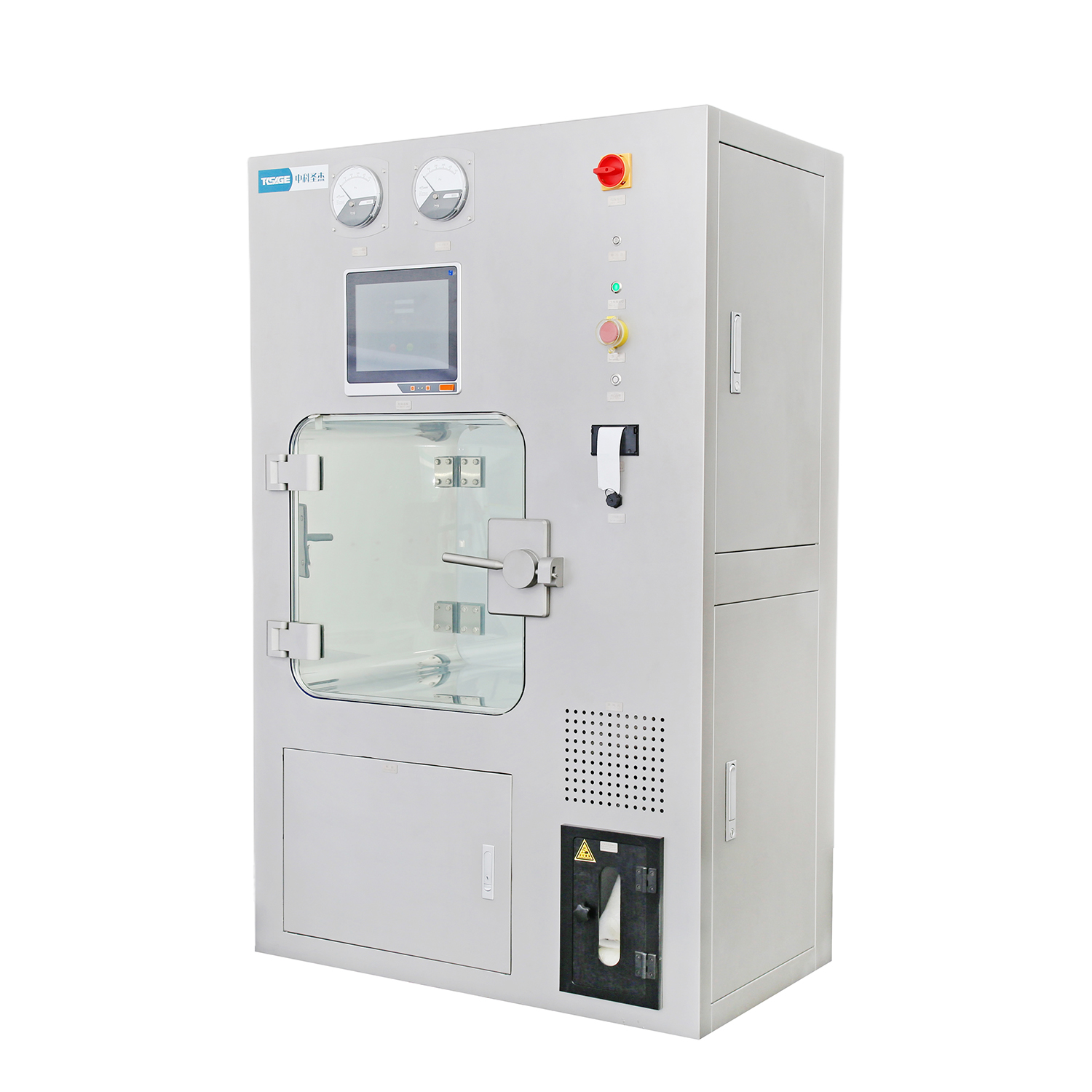
In the pharmaceutical manufacturing landscape, contamination control is the absolute cornerstone of product safety and regulatory success. Industry standards and numerous studies consistently highlight that personnel movement accounts for approximately 80% of cleanroom contamination risks. Every time an operator enters or exits a classified zone, they disturb the airflow and introduce potential particulate matter or microbial bioburden. Beyond the immediate safety risks, there is a substantial operational cost hidden in these movements. Unnecessary gowning and de-gowning cycles required simply to move small materials waste valuable production time and drastically increase consumable expenditures.
This is where the Pass-through window serves as a critical infrastructure component. It must be defined not merely as a transfer hatch, but as a vital "Process Efficiency Tool" and a robust "Contamination Lock" within your facility's Contamination Control Strategy (CCS). Modern facility design has moved beyond simple static chambers. The industry is seeing a rapid transition toward advanced solutions, such as the VHP pass box, to meet the stringent demands of high-containment areas. Understanding the role, types, and compliance requirements of these units is essential for maintaining GMP standards.
Risk Reduction: Pass-through window maintain the integrity of classified zones by acting as an airlock buffer during material transfer.
Selection Logic: Choose Static for Clean-to-Clean transfers and Dynamic or VHP models for Uncontrolled-to-Clean or sterile transfers.
Compliance: GMP requires validation features (DOP ports, pressure gauges) on dynamic models; simple boxes are insufficient for high-grade zones.
ROI Factor: Drastic reduction in door openings and operator traffic directly lowers HVAC load and particulate counts.
A Pass-through window operates on a deceptively simple premise that solves complex operational challenges. Its primary function is to act as a contamination barrier between two distinct environments. By utilizing an interlocking door mechanism, the system ensures that both doors cannot be open simultaneously. This creates an "Airlock" principle, preventing the direct rush of air between zones of different cleanliness classes. Without this barrier, pressure differentials would equalize rapidly, potentially allowing contaminants to migrate from a dirty zone into a clean processing area.
While contamination control is the primary driver, the return on investment (ROI) regarding workflow efficiency is often underestimated. In a facility without adequate transfer hatches, operators must carry materials manually between zones. This necessitates a full exit procedure, de-gowning, moving the material, re-gowning, and re-entering.
By installing a Pass-through window, you effectively eliminate these redundant procedures for simple material hand-offs. We also see a significant reduction in "door opening events" for the main cleanroom doors. Every time a main door opens, the room's differential pressure destabilizes, forcing the HVAC system to work harder to recover the set parameters. Reducing main traffic lowers the HVAC load and stabilizes the particulate counts, contributing to a more consistent manufacturing environment.
Pass-through window are not exclusive to incoming raw materials; they are equally critical for waste management. Positioning Pass-through window as safe exit routes allows for a unidirectional flow of bio-waste. This follows the "Clean-to-Dirty" logic, ensuring that hazardous byproducts or used consumables are removed without traversing back through the core sterile core, thereby preventing cross-contamination.
The industry has largely shifted from passive transfer methods to active decontamination. Modern requirements often dictate that surface bioburden must be reduced before an item enters a Grade A or B zone. This has led to the integration of Disinfection and Sterilization technologies directly into the transfer chamber. While UV lamps provide a baseline level of sanitization, they are limited by shadowing effects. Consequently, facilities handling biologics are adopting Vaporized Hydrogen Peroxide (VHP) integration to ensure complete surface sterilization during the material transfer phase.
Selecting the correct equipment depends entirely on the zones you are connecting. A mismatch here—such as using a static box for a sterile transfer—can lead to immediate regulatory observations.
The static pass box is the workhorse for transfers between two zones of equal cleanliness, such as moving materials from one Grade B room to another Grade B room. Since the air cleanliness is identical on both sides, there is no requirement to "clean" the air inside the box.
Mechanism: These units operate without internal airflow. They rely heavily on electromagnetic or mechanical interlocks to ensure only one door is open at a time. The primary benefits are a low Total Cost of Ownership (TCO) and zero energy consumption. However, they offer no "self-cleaning" capability. If a particle enters the box, it stays there until manually cleaned.
When transferring items from a lower grade (uncontrolled or Grade D/C) to a higher grade (Grade A/B), a dynamic model is mandatory. It functions essentially as a mini-cleanroom equipped with built-in fan filter units (FFU).
Performance: The dynamic box actively recirculates air through HEPA or ULPA filters. It serves to "wash" the material with clean air, achieving ISO 5 conditions inside the chamber before the lock on the clean side releases. This ensures that the dirty air from the lower-grade room does not contaminate the high-grade room when the transfer occurs.
For the most critical applications, such as aseptic processing, bio-pharmaceutical manufacturing, and BSL-3/4 laboratories, standard dynamic boxes may not suffice. These environments require a verified 6-log reduction in bioburden.
Mechanism: The High-efficiency Sterilizing VHP Pass-through Box features integrated Vaporized Hydrogen Peroxide (VHP) generators. Unlike simple air filtration, VHP cycles chemically sterilize the exposed surfaces of the materials being transferred. This is the only viable option for transferring heat-sensitive biological materials into sterile isolation zones without using an autoclave.
| Feature | Static Pass Box | Dynamic Pass Box | VHP Pass Box |
|---|---|---|---|
| Primary Use Case | Clean-to-Clean (Equal Zones) | Uncontrolled-to-Clean | Sterile/Bio-containment |
| Airflow | None (Passive) | Recirculating Laminar Flow | VHP Injection + Aeration |
| Filtration | N/A | HEPA / ULPA | HEPA + VHP Sterilization |
| Cleanliness Class | Matches Room Class | Reaches ISO 5 (Grade A) | Sterile Surface (Log 6) |
To meet Good Manufacturing Practices (GMP), the physical construction of the Pass-through window must facilitate cleaning and prevent particle generation. Regulatory auditors will scrutinize these specific design elements.
The internal chamber must be constructed from SUS 304 or SUS 316 Stainless Steel. Specifically, for areas using VHP or harsh disinfectants, SUS 316 is preferred due to its superior chemical resistance. A critical GMP requirement is the use of arc or coved corners inside the chamber. Sharp 90-degree corners trap dust and microbes, making them difficult to clean. Coved corners ensure that wipe-down procedures are effective.
While the external shell can be powder-coated steel to save costs in non-sterile corridors, full stainless steel construction is the preferred standard for high-grade areas to prevent rust and paint chipping.
The interlock is the heart of the Pass-through window. While mechanical linkages exist, electronic interlocks with LED indicators are vastly preferred in modern pharma. Mechanical systems rely on physical rods and latches that can wear down, generate metal particles, and jam.
Advanced systems utilize an "Interlock Guard." This logic prevents the clean-side door from opening until a specific "purge cycle" is complete. For a dynamic box, this might be an air shower cycle; for a Biosafety VHP Pass-through Box, the door remains locked until the sterilization and aeration cycles confirm the concentration of H2O2 is safe for the operator.
For dynamic models, airflow uniformity is non-negotiable. The air velocity must be maintained at 0.45 m/s ± 20% to ensure laminar flow. This velocity is sufficient to sweep particles away without creating turbulence that could re-entrain contaminants. Furthermore, filtration efficiency must utilize minimum H13 or H14 HEPA filters, guaranteeing 99.995% efficiency at 0.3 microns.
A common mistake is treating a Pass-through window as furniture. In a GMP facility, it is critical equipment that requires full validation (IQ/OQ/PQ). If you cannot validate it, you cannot use it for regulated manufacturing.
Dynamic boxes must include DOP/PAO test ports located upstream of the filter. This design allows validators to inject an aerosol challenge and measure upstream concentration without dismantling the unit. Without these ports, performing a compliant filter integrity test becomes invasive and risky.
The "Recovery Test" measures the ability of the dynamic pass box to return to a "clean" status after a contamination event (such as opening the door). Typically, the unit should recover to its baseline cleanliness within 15–20 minutes. This data helps define the standard operating procedure (SOP) for how long operators must wait between loading materials and opening the clean-side door.
Smoke tests (airflow visualization) are conducted to verify that air patterns do not create dead zones or turbulence where contaminants could hide. For a Biosafety VHP Pass-through Box, validation goes a step further. You must use biological indicators (BIs) placed in challenging locations within the load to prove sterilization efficacy, ensuring a complete kill of resistant spores.
Operational reliability depends on a strict maintenance schedule. Neglecting consumables leads to drift in performance and eventual compliance failure.
UV Lamps: These typically have a lifespan of around 4,000 hours. However, they should be monitored for intensity, not just whether they light up. Blue light does not always equal germicidal UV-C intensity.
Pre-filters (G4): These safeguard the expensive HEPA filters. They should be replaced every 6 months to prevent airflow blockage.
HEPA Filters: Depending on the dust load and pressure drop readings, these generally require replacement every 6–12 months.
When budgeting, decision-makers must balance the higher upfront cost of a Pharmaceutical-grade VHP Pass-through Box against the immense risk of batch failure. While a static box is cheap, a single contamination event caused by transferring non-sterile material into an aseptic core can cost millions in lost product and regulatory fines. The TCO analysis favors high-spec equipment for any critical zone transfer.
Proper installation ensures long-term cleanability. "Flush mounting" is the gold standard, where the box is installed so that it sits flush with the cleanroom wall, eliminating dust ledges. Furthermore, location planning is vital. Boxes should be placed near process equipment, such as centrifuges or filling lines, to minimize operator steps. Installing a box simply "where it fits on the wall" often leads to inefficient workflows.
The Pass-through window acts as the guardian of your cleanroom's differential pressure and sterility. It is a strategic tool that, when selected and maintained correctly, significantly lowers bioburden risks and operational costs. For general pharmaceutical applications involving non-sterile to sterile transfers, Dynamic Pass Boxes are the industry standard. However, for biologics, vaccines, and sterile manufacturing, the integration of VHP pass boxes is often non-negotiable to ensure product safety.
We encourage facility managers to audit their current material transfer flows. Identify areas where static hatches are being used inappropriately for critical transfers and consider upgrading to dynamic systems. Investing in the right transfer technology today protects your product and your compliance status tomorrow.
A: The primary difference lies in airflow. A static pass box is passive, having no internal ventilation, and is used for transfers between zones of equal cleanliness. A dynamic pass box features a built-in fan and HEPA filter to actively recirculate and clean the air inside the chamber. This allows it to transfer materials from a lower-grade area to a higher-grade area by removing contaminants before the clean-side door is opened.
A: While protocols vary based on internal SOPs, a standard duration is often between 15 to 30 minutes to ensure adequate surface exposure. However, reliance solely on UV is diminishing in favor of active airflow or VHP because UV light cannot sterilize shadowed areas of the material. It should be treated as a supplementary sanitization step rather than a sterilization method.
A: Yes, Pass-through window are frequently used for removing biological waste. In these scenarios, the pass box prevents the dirty waste from contaminating the clean corridor. For high-containment labs, the pass box may operate in a "sink" pressure mode or utilize a sterilization cycle before the waste is removed to the disposal corridor, ensuring that biohazards do not escape the containment zone.
A: The standard air velocity for laminar flow within a dynamic pass box is typically 0.45 m/s ± 20%. This velocity is critical as it provides a uniform sweep of air that removes particles effectively without causing turbulence. Turbulence can trap particles in eddies, preventing them from being captured by the return air ducts and filters.
A: No, VHP (Vaporized Hydrogen Peroxide) is not required for all transfers. It is specifically mandatory or highly recommended for aseptic processing, sterile manufacturing, and bio-decontamination where surface sterilization (a 6-log reduction) is required. For general pharmaceutical transfers (e.g., Grade C to Grade D), a standard dynamic or static pass box is usually sufficient.


