 EnglishEnglish


Views: 0 Author: Site Editor Publish Time: 2026-05-08 Origin: Site


You use a sterile isolator to keep medicine safe from germs. The isolator makes a space that lowers the chance of germs by up to 99% compared to regular cleanrooms. It keeps the air very clean at ISO 5 quality. This means there are fewer problems found during checks.
Evidence Description | Impact |
|---|---|
Reduction in contamination rates | Up to 99% compared to traditional cleanrooms |
Maintenance of air quality | ISO 5 (Class 100) or better |
Fewer regulatory observations | Up to 50% fewer during inspections |
New technology, like real-time monitoring and pharmacy automation, helps you work safer and faster. You should remember that how you set up your process is as important as training. Removing problems in the process gives better results.
A sterile isolator lowers contamination risks by up to 99%. This helps make medicine safer for patients. Using a sterile isolator helps pharmacies follow strict safety rules like USP 797. This protects both the products and the patients. Real-time monitoring in sterile isolators finds problems quickly. This makes compounding safer and more efficient. Barrier isolators cost less and use less space than cleanrooms. This makes them great for smaller pharmacies. Regular training and good record-keeping are needed to keep safety and quality high in sterile compounding.
You want your pharmacy to be safe. A sterile isolator helps by making a special clean space. This space meets ISO Class 5 or Grade A rules. The air stays clean, and germs and dust cannot get in. The isolator has strong filters and air systems to keep things pure. You do not have to worry about outside germs.
There are many ways medicine can get contaminated. Here are some common causes:
Handling or storing raw materials the wrong way
Bad labeling or not testing materials
Materials getting worse from the environment
Not cleaning things well enough
Not checking for germs or toxins after making medicine
Letting products go before checking if they are safe
Storing things in a bad way
Using dates that are not supported by tests
Chips, dust, or fibers getting into the medicine
Germs that can cause fever
Chemicals like water, gases, or vapors
Germs like viruses, bacteria, or fungi
Workers who are not trained or do not wash hands
Problems with the building or air flow
A sterile isolator helps you stop these problems. Its design keeps your hands and outside air away from the medicine. You use gloves and closed doors. This setup lowers mistakes and keeps medicine safe.
Here is how a sterile isolator is different from other options:
Feature | Benefit |
|---|---|
Barrier to particulate and microbial ingress | Keeps the inside at ISO Class 5 or better. |
Enhanced workflow continuity | Stops work from being interrupted by outside problems. |
Integration with airlocks and transfer hatches | Lets you move things in and out without letting in germs. |
You want to keep your products and patients safe. A sterile isolator gives strong protection. It makes a closed space that blocks germs and dust. The isolator uses special filters, like HEPA or ULPA, to clean the air. You only touch medicine with gloves built into the chamber. This lowers the chance of germs from your hands.
You also lower the risk of infection for patients. Better cleaning means fewer people get sick in the hospital. Real-time tracking helps you find problems fast. You can fix them before they hurt anyone. The isolator also helps you avoid false alarms in safety tests. This saves money and keeps your products safe.
You use a sterile isolator to handle dangerous materials safely. You keep your staff and patients safe from harm. You also meet high safety standards for medicine.
Tip: Using a sterile isolator in your compounding area can help you pass checks and keep your patients healthy.
You have to follow strict rules when making medicine. USP 797 and GMP standards tell you what to do for sterile compounding. These rules keep patients safe and protect your products. A sterile isolator helps you follow these rules every day.
Your compounding area must stay clean and controlled. The isolator makes an ISO Class 5 space. This stops germs and dust from getting inside. Strong filters and air systems keep the air pure. You also need to wear special clothes and follow training rules. Staff must learn aseptic techniques and pass tests to show they can work safely.
Here is a table that lists the main rules for sterile compounding:
Requirement | Description |
|---|---|
Facility Design and Environmental Controls | You must use cleanrooms with ISO Class 5 air quality for compounding. Buffer and ante rooms need ISO Class 7 or 8. Positive pressure keeps contamination out. |
Personnel Training and Competency | Staff must get special training in aseptic techniques. They must pass tests like media-fill and gloved fingertip testing. |
Aseptic Technique and Hand Hygiene | You must follow strict hand hygiene and garbing rules. Sterile gloves and proper clothing keep germs away. |
Cleaning and Disinfection Procedures | You must clean and disinfect the compounding area often. Use approved agents and follow a set schedule. |
Beyond-Use Dating (BUD) and Stability | You must assign BUDs based on how stable and sterile the medicine is. Follow guidelines for storage and preparation. |
Risk Levels of Compounding | Compounding is grouped into low, medium, and high risk. You must follow special steps for each level. |
Quality Assurance and Monitoring | You must check your equipment and environment often. Keep records of all quality checks. |
Documentation and Record-Keeping | You must keep detailed records of every compounding activity. This includes training logs and environmental monitoring data. |
If you do not follow these rules, patients can get hurt. The NECC meningitis outbreak in 2012 showed what happens when rules are not followed.
The 2012 meningitis outbreak at the New England Compounding Center (NECC) caused fungal contamination in methylprednisolone injections. Nearly 800 patients were harmed and over 100 died. This event shows why compounding staff must follow quality standards to keep patients safe.
You need an isolator to help you follow the rules. It gives you a safe space, helps train your staff, and makes it easier to check your environment. You lower the risk of contamination and keep patients safe.
You must keep clear records for every step in compounding. Good records help you prove you follow the rules. They also help you find and fix problems fast.
Sterile isolators make record-keeping easier. Modern isolators have sensors and data loggers built in. These tools track air quality, temperature, and user actions. You get a full audit trail for every batch you make. You can show inspectors you followed all safety steps.
Here are best ways to keep records and track everything:
Keep detailed records of all compounding activities.
Record batch numbers, training logs, equipment maintenance, and environmental monitoring data.
Use automated data logging to track every action and event.
Keep batch records for each test and product.
Use alarms and sensors to monitor environmental parameters.
Review records often to spot problems early.
You must keep these records for audits and investigations. Inspectors will check your logs to make sure you followed USP 797 and GMP rules. Good traceability keeps your pharmacy and patients safe.
A sterile isolator helps you meet safety and quality standards. You can trust your records and pass checks with confidence.
You want your pharmacy to run well and safely. A sterile isolator helps make each step easier to control. You do not worry about outside air or dust. The isolator keeps everything clean and steady. This means you fix fewer mistakes and spend more time making safe medicine.
You can see how the isolator helps your work in the table below:
Evidence Description | Benefit to Workflow Efficiency |
|---|---|
Controlled environments minimize contamination risks | Fewer errors and less rework, so work is faster |
Streamlined processes through advanced technologies | You compound medicine quicker and do fewer manual tasks |
Multi-chamber airflow system reduces particulates | Both workers and products stay safer, so work goes smoother |
You can work on more than one product at once. The isolator lets you switch batches without cleaning the whole room. This matters when you need to make different medicines fast. Staff learn quicker because the isolator uses clear steps and safety checks.
You want to stop mistakes that could hurt patients. The isolator puts a barrier between you and the medicine. You do not touch the product directly. This lowers the chance of germs or particles getting in.
The isolator makes a wall so you do not touch medicine, which stops contamination.
It limits people from touching things and uses cleaning cycles to lower contamination from workers or air.
The isolator is needed for jobs that must be very clean, like filling injectable drugs.
The isolator uses machines, pressure, and strict cleaning to keep things safe. These features protect the environment even when you work with many products. You can trust each batch stays clean and safe for patients.
Tip: Using a sterile isolator helps your team work faster and safer. It also keeps your patients safe from cross-contamination.
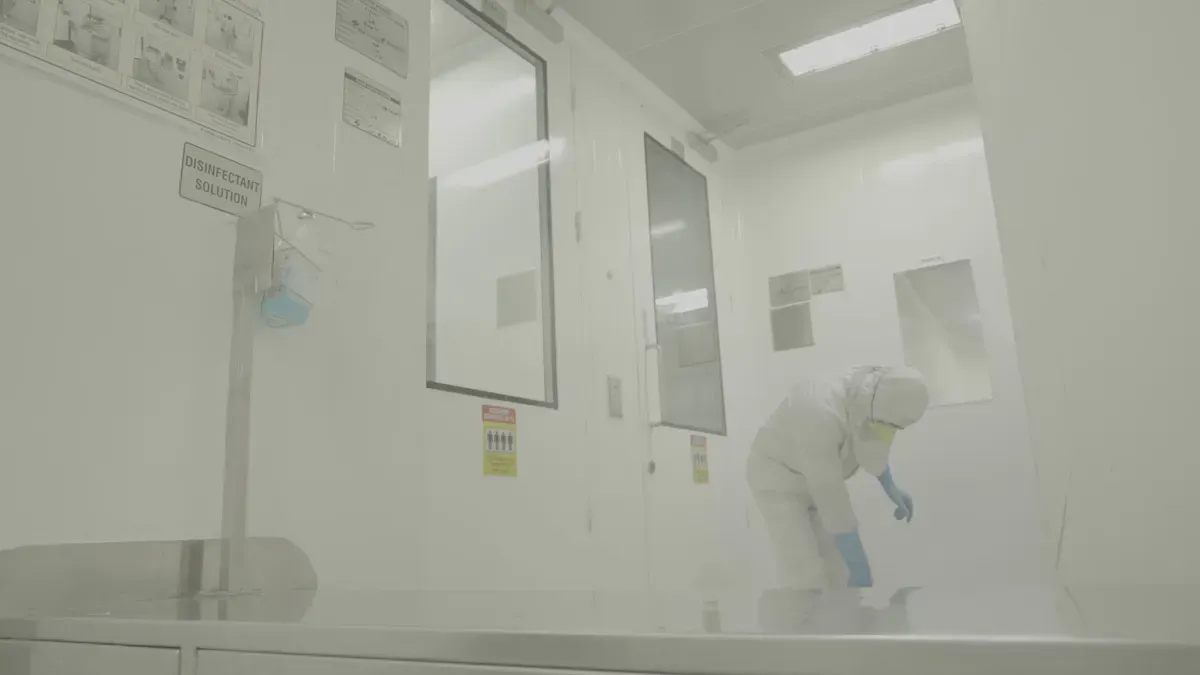
Image Source: pexels
You want your pharmacy to be safe and work well. Barrier isolator technologies give strong protection from germs and dust. These systems make a closed space for your work. You do not have to rely on people to wear special clothes or use big HVAC systems. Instead, you get a controlled space that keeps out contamination.
In regular cleanrooms, workers must follow strict rules for clothes and cleaning. If they make mistakes, germs can get in.
Barrier isolator technologies use sealed boxes and gloves. You only touch medicine through the gloves, so you lower the chance of cross-contamination.
You can use a barrier isolator for special jobs. Machines help you keep the area clean and safe.
Note: Barrier isolator technologies help you reach high safety and quality standards in pharmacies.
You may wonder how much money and space each system needs. Barrier isolators usually cost less to set up. They use less energy and need less care than cleanrooms. Cleanrooms need more space, bigger HVAC systems, and special places to put on gowns.
Aspect | Barrier Isolators | Cleanrooms |
|---|---|---|
Initial Costs (CAPEX) | Usually lower because they need less equipment | Higher because of HVAC and building needs |
Ongoing Costs (OPEX) | Lower energy and care costs | Higher energy use and more maintenance |
Flexibility | Not as easy to make bigger | Easier to grow for more jobs |
Barrier isolators need regular checks. You must change gloves, check seals, and clean often. Cleanrooms need their HVAC and filters checked all the time. If a barrier isolator breaks, you fix just one unit. If a cleanroom breaks, you might have to stop all work.
Barrier isolators also save space. You do not need a big room or extra places to put on gowns. This makes them a good choice for small pharmacies or places with little space.
Long-term Benefit | Description |
|---|---|
Increased Drug Safety | Barrier isolator technology helps keep drugs clean and patients safe. |
Reduced Operating Costs | Pharmacies spend less money after switching to barrier isolators. |
Enhanced Aseptic Processing | You can make medicine faster and safer with modern isolators. |
You get better drug safety, spend less money, and get more reliable results with barrier isolator technologies. Many pharmacies see good results after they switch.
Sterile isolators make pharmacy work much better. They help you clean up faster, sometimes by 75%. You use less energy, about 60-80% less than before. You also waste less medicine.
Aspect | Impact on Efficiency/Cost |
|---|---|
Decontamination Time | Reduced by up to 75% |
Personnel Requirements | 30-50% fewer operators needed |
Energy Consumption | 60-80% lower than clean rooms |
Product Waste | Significant reduction |
Batch Turnaround Time | Improved by 20-40% |
Sterile isolators make sure medicine stays clean and safe. They help you follow USP <797> rules. You should check how you keep things safe by looking at your ISO Class 5 rooms, teaching workers, and watching for problems.
Check ISO Class 5 rooms often
Teach workers and check their clothes
Watch the air and surfaces for germs
Clean and disinfect on a set plan
Get your rooms checked every six months
Using sterile isolators can make your pharmacy safer and help you work better.
You use a sterile isolator to keep medicine safe. It creates a clean space. You use gloves to handle items inside. The system blocks germs and dust. You can trust the medicine stays pure. Many pharmacies use rabs for this reason.
You choose rabs because they give strong protection. You do not need a big cleanroom. Rabs use sealed boxes and gloves. You lower the risk of mistakes. You also save money and space. Many pharmacies trust rabs for safety.
You use rabs to keep records and show you follow rules. Rabs have sensors and logs. You can track every step. Inspectors see that you use rabs to keep medicine safe. You pass checks more easily with rabs in your pharmacy.
You work faster with rabs. You do not need to clean a whole room between batches. Rabs let you switch products quickly. You spend less time fixing mistakes. Your team learns to use rabs with simple steps. Rabs help you work better.
You find rabs easy to care for. You check gloves and seals often. You clean the inside on a set plan. If something breaks, you fix just one rabs unit. You do not stop all work. Rabs save you time and effort.


