 EnglishEnglish


Views: 0 Author: Site Editor Publish Time: 2026-06-15 Origin: Site


In high-containment environments such as P3/P4 biosafety laboratories, pharmaceutical cleanrooms, infectious disease hospitals, and hazardous chemical facilities, preventing contaminants from leaving controlled areas is a critical safety requirement. Even after protective clothing is removed, biological aerosols, chemical residues, or hazardous particles may remain on personnel surfaces, creating a potential contamination risk.
A Forced Shower Room is designed specifically to eliminate this risk. By combining programmed full-body spraying, airtight isolation, differential pressure control, and intelligent interlocking systems, it provides a mandatory decontamination process before personnel transition between contamination zones and clean areas.
As an essential component of modern biosafety and contamination control systems, forced shower rooms help organizations comply with GMP requirements, biosafety regulations, and environmental protection standards while safeguarding both personnel and surrounding environments.
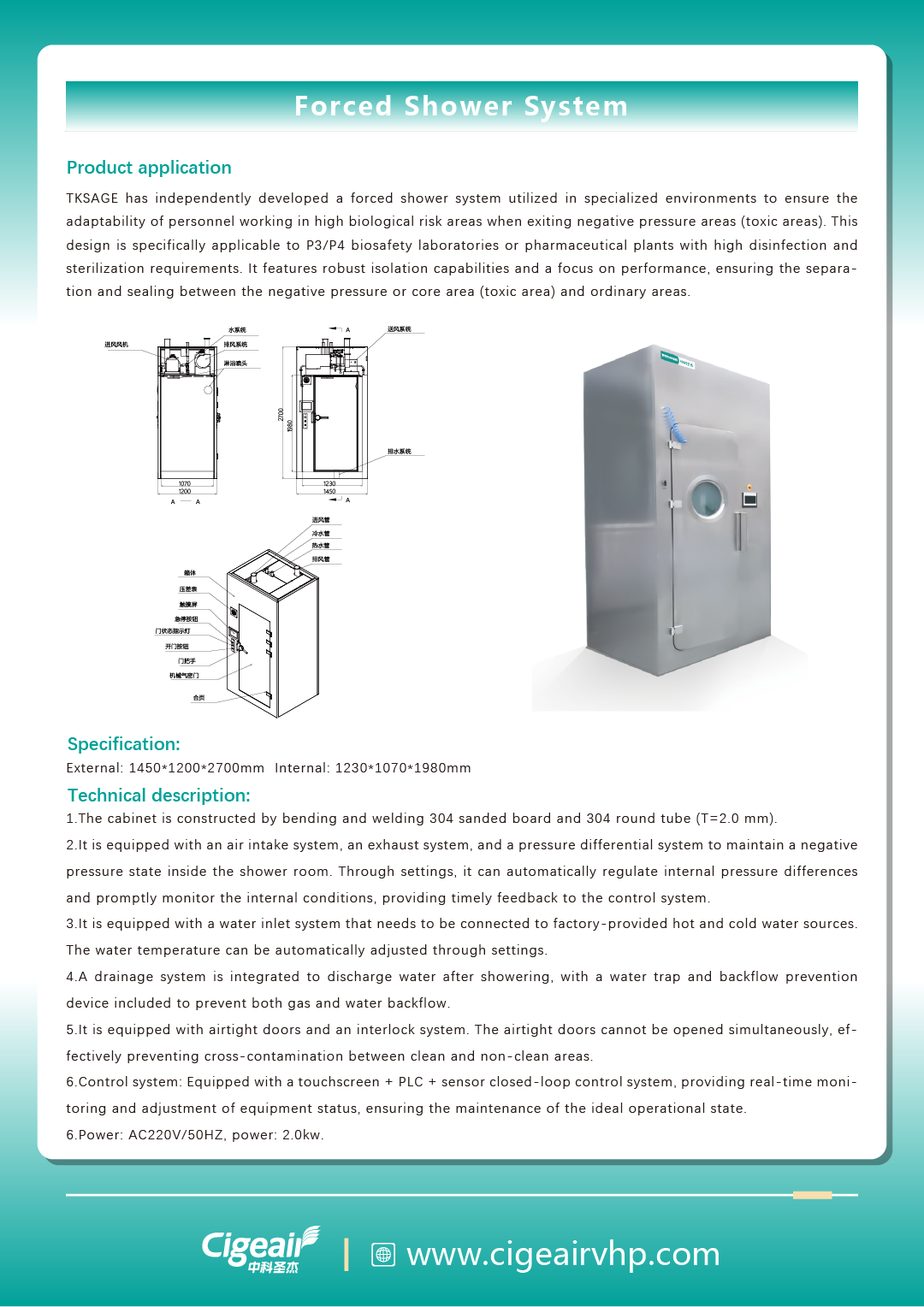
A Forced Shower Room, also known as a decontamination shower booth, is a specialized containment system designed to remove hazardous contaminants from personnel through a mandatory, automated showering process.
Unlike conventional showers, forced shower rooms are engineered for biosafety and industrial applications where contamination control is critical. The shower process cannot be bypassed or manually interrupted, ensuring every individual completes the required decontamination cycle before entering or leaving controlled environments.
These systems are commonly installed between contaminated zones and clean areas, forming a critical barrier against cross-contamination.
Personnel movement is one of the most common pathways for contamination transfer in laboratories and pharmaceutical facilities.
Without proper decontamination procedures, contaminants such as:
• Bioaerosols
• Pathogenic microorganisms
• Hazardous chemicals
• Radioactive particles
• Dust and particulate matter
may be unintentionally carried into clean environments.
A forced shower room minimizes this risk by enforcing a standardized decontamination process while maintaining environmental isolation through pressure control and interlocked door systems.
Its primary objectives include:
• Personnel decontamination
• Environmental protection
• Biosafety compliance
• Prevention of cross-contamination
• GMP and laboratory regulatory compliance
The operational concept of a forced shower room is based on three coordinated protection mechanisms: forced decontamination, airtight isolation, and intelligent process control.
The decontamination process begins when personnel enter the chamber and the entrance door is locked.
Multiple high-density spray nozzles located on the ceiling and side walls deliver pressurized water or disinfectant solution across the entire body surface. The spray system is designed to achieve complete coverage, effectively removing contaminants from:
• Protective clothing
• Hair
• Skin surfaces
• Footwear
• Equipment carried by personnel
The wastewater is collected and transferred through a dedicated drainage system for treatment and disposal.
To prevent contaminated air from escaping the chamber, the forced shower room maintains a controlled negative pressure environment.
Typical operating pressure ranges from:
• -5 Pa to -15 Pa
This pressure differential ensures airflow continuously moves inward rather than outward, reducing contamination leakage risks.
Combined with airtight doors and dual-door interlocking mechanisms, the room effectively separates clean and contaminated zones.
Key benefits include:
• Airflow containment
• Cross-contamination prevention
• Environmental protection
• Personnel safety
Modern forced shower rooms utilize PLC-based automation systems to manage the entire decontamination process.
Critical parameters are automatically controlled, including:
• Shower duration
• Water temperature
• Water pressure
• Differential pressure
• Door status
The exit door remains locked until the entire decontamination cycle has been completed, preventing personnel from skipping mandatory procedures.
This automated control strategy ensures consistency, traceability, and regulatory compliance.
A high-performance forced shower room consists of multiple integrated systems working together to achieve complete decontamination and containment.
The airtight door system forms the first containment barrier.
Key features include:
• Double-door interlocking
• Electronic and mechanical locking systems
• High-performance sealing gaskets
• Tempered glass observation windows
• Emergency release functionality
The two doors cannot be opened simultaneously, ensuring complete separation between controlled environments.
The spray water system is the core decontamination component.
Typical configuration includes:
• Stainless steel spray nozzles
• High-pressure booster pumps
• Automatic water temperature control
• Water filtration units
• Pressure stabilization systems
Water temperature is typically maintained at:
• 38°C ± 2°C
while spray pressure is controlled between:
• 0.2 MPa and 0.4 MPa
to ensure effective contaminant removal without causing discomfort to operators.
Proper ventilation is essential for maintaining containment performance.
The forced shower room incorporates:
• Fresh air supply units
• Medium-efficiency filters
• HEPA-filtered exhaust systems
• Differential pressure monitoring devices
• Airflow balancing controls
The system typically achieves more than 20 air changes per hour, helping remove moisture and airborne contaminants during operation.
An efficient drainage system is critical for removing contaminated wastewater generated during the decontamination process.
The system typically includes:
• Stainless steel collection trays
• Anti-slip drainage grilles
• U-shaped traps
• Backflow prevention valves
• Dedicated wastewater discharge pipelines
These components prevent contaminated water, odors, and hazardous gases from flowing back into the chamber. For P3/P4 laboratories and other high-risk facilities, wastewater must undergo sterilization treatment before discharge to comply with biosafety regulations.
Modern forced shower rooms utilize advanced PLC and touchscreen control systems to provide automated operation and real-time monitoring.
Key functions include:
• Shower cycle programming
• Water temperature control
• Differential pressure monitoring
• Door interlock management
• Alarm and fault notifications
• Data recording and operational traceability
Operators can easily monitor equipment status and adjust parameters through a user-friendly HMI interface, improving both operational efficiency and safety.
Compared with traditional shower facilities, forced shower rooms provide significantly higher levels of containment, decontamination effectiveness, and process control.
Major advantages include:
• Mandatory decontamination procedures that cannot be bypassed
• Airtight isolation between contaminated and clean zones
• Automated PLC-controlled operation
• Stable negative pressure containment
• Full-body spray coverage without dead zones
• GMP and biosafety compliance
• Reduced risk of cross-contamination
• Enhanced personnel and environmental protection
These benefits make forced shower rooms an essential component in modern containment and biosafety facilities.
Forced shower rooms are widely used in industries where contamination control, personnel protection, and environmental safety are critical.
In high-containment biological laboratories handling pathogens such as tuberculosis, coronavirus, influenza viruses, and other infectious microorganisms, personnel must undergo decontamination before leaving containment areas.
Forced shower rooms help remove biological contaminants from clothing and body surfaces while preventing pathogens from escaping laboratory environments.
Key requirements include:
• Negative pressure containment
• Airtight interlocking doors
• Wastewater sterilization systems
• Compliance with biosafety regulations
In sterile pharmaceutical production environments, contamination control is essential for product quality and regulatory compliance.
Forced shower rooms help remove:
• Dust particles
• Hair
• Microorganisms
• Surface contaminants
before personnel enter clean manufacturing zones.
These systems support GMP-compliant production processes and reduce contamination risks during vaccine, biologics, and sterile drug manufacturing.
Facilities handling toxic chemicals, carcinogens, pesticides, and highly active compounds require strict personnel decontamination measures.
Forced shower rooms remove hazardous residues from personnel before they leave production areas, reducing exposure risks and preventing contaminants from being carried into public environments.
Healthcare workers operating in isolation wards and infectious disease treatment areas face constant exposure to biological hazards.
Forced shower rooms provide an additional layer of protection by removing contaminants before personnel enter clean hospital zones.
In nuclear research centers and radioactive material handling facilities, forced shower systems help remove radioactive dust and particles from personnel, reducing contamination and exposure risks.
Proper installation and operation are essential for maintaining the effectiveness of a forced shower room.
Installation recommendations include:
• Positioning the unit between contaminated and clean zones
• Providing stable power and water supplies
• Connecting drainage to dedicated wastewater treatment systems
• Ensuring sufficient floor load capacity
• Performing comprehensive commissioning before operation
Prior to service, all systems should undergo verification of:
• Spray performance
• Water temperature control
• Differential pressure stability
• Door interlocking functions
• Alarm systems
A continuous operational test period is recommended before final acceptance.
Routine maintenance helps ensure long-term performance and regulatory compliance.
Daily Maintenance
• Clean interior and exterior surfaces
• Verify spray pressure and water temperature
• Check drainage functionality
• Inspect alarm conditions
Weekly Maintenance
• Clean spray nozzles
• Inspect water filters
• Clean pre-filters
• Test interlocking mechanisms
Monthly Maintenance
• Calibrate differential pressure sensors
• Inspect door seals
• Examine pipelines and valves
• Verify control system accuracy
Annual Maintenance
• Replace HEPA exhaust filters
• Inspect housing integrity
• Perform full system calibration
• Validate operational performance
Preventive maintenance significantly reduces downtime and helps maintain containment effectiveness.
Like any containment equipment, forced shower rooms may experience occasional operational issues.
Common problems include:
Insufficient Spray Pressure
Possible causes:
• Low water supply pressure
• Blocked nozzles
• Booster pump failure
Recommended solutions:
• Verify incoming water pressure
• Clean or replace nozzles
• Repair or replace booster pumps
Abnormal Water Temperature
Possible causes:
• Temperature sensor malfunction
• Heating module failure
• Incorrect hot and cold water balance
Recommended solutions:
• Calibrate sensors
• Repair heating systems
• Adjust water mixing settings
Door Interlock Failure
Possible causes:
• Sensor damage
• Control circuit faults
• Improper door closure
Recommended solutions:
• Inspect wiring
• Replace faulty sensors
• Verify door alignment
Insufficient Negative Pressure
Possible causes:
• Exhaust filter blockage
• Airflow imbalance
• Seal leakage
Recommended solutions:
• Replace filters
• Adjust airflow parameters
• Replace damaged gaskets
Cigeair provides customized forced shower room solutions for biosafety laboratories, pharmaceutical facilities, hospitals, and high-containment industrial environments.
Key features include:
• SUS304 or SUS316L stainless steel construction
• Intelligent PLC control systems
• Stable negative pressure containment
• High-performance airtight doors
• Customizable chamber dimensions
• GMP and biosafety compliance
• Long-term technical support and maintenance services
With extensive experience in containment technology and cleanroom equipment, Cigeair delivers reliable decontamination solutions that help customers achieve safer and more compliant operations.
What is the difference between a forced shower room and an air shower?
An air shower removes dust using high-velocity clean air, while a forced shower room uses water-based decontamination to remove biological, chemical, and hazardous contaminants.
Can a forced shower room be used in pharmaceutical cleanrooms?
Yes. Forced shower rooms are widely used in pharmaceutical and biotechnology facilities to support contamination control and GMP compliance.
What materials are commonly used for construction?
Most systems are manufactured using SUS304 or SUS316L stainless steel due to their corrosion resistance, cleanability, and long service life.
How often should HEPA filters be replaced?
Replacement frequency depends on operating conditions, but annual inspection and validation are generally recommended.
Looking for a reliable forced shower room solution for your laboratory, pharmaceutical facility, or containment project?
Cigeair provides customized forced shower room systems designed to meet biosafety, GMP, and industrial contamination control requirements.
Contact our engineering team today to discuss your project requirements and receive a tailored containment solution.


