 EnglishEnglish


Views: 0 Author: Site Editor Publish Time: 2026-07-16 Origin: Site


In pharmaceutical manufacturing and high-containment laboratories (BSL-3/BSL-4), standard mechanical doors often fail to maintain reliable differential pressure. This failure leads directly to severe cross-contamination risks. It also triggers immediate regulatory audit failures. Traditional compression seals rely heavily on manual physical force and perfect frame alignment. They degrade steadily over time. This degradation creates unseen microscopic leaks. Introducing the active pneumatic inflatable seal establishes a new industry standard. This technology delivers verifiable, zero-leakage isolation automatically.
The purpose of this guide is straightforward. We provide facility engineers and biosafety officers an evidence-based framework. You will learn exactly how to evaluate, shortlist, and specify a biosafety airtight door for pharmaceutical lab applications. We move past basic marketing claims. We focus strictly on technical realities. You need reliable performance data to execute successful facility upgrades. This evaluation guide delivers those critical insights.
Active Containment: Inflatable seals provide dynamic, continuous pressure compensation that mechanical cleanroom doors cannot match.
Material Compliance: High-strength 304/316L stainless steel profiles paired with FDA-compliant, VHP-resistant medical-grade silicone seals are non-negotiable for GMP compliance.
Fail-Safe Criticality: Decision-makers must evaluate pneumatic systems based on power-loss contingencies and independent pressure monitoring capabilities.
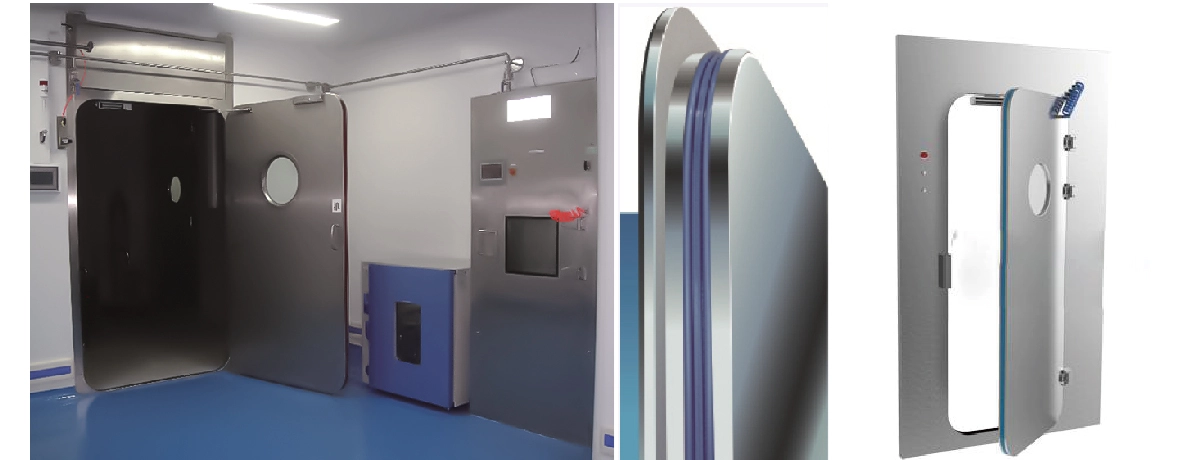
Traditional compression gaskets suffer from an inevitable condition called compression set. The rubber material loses memory over time. The hinge-side gap widens continually as hinges bear uneven stress. Operators apply varying physical force during closing. This reliance on human effort creates inconsistent pressure across the door frame. Containment eventually fails. You cannot rely on manual latches for critical isolation in a modern pharmaceutical lab. Standard gaskets simply cannot bridge microscopic surface gaps reliably.
Pneumatic sealing fundamentally changes this dynamic. A localized control system pumps compressed air into an elastomeric tube. The seal expands outward uniformly. It presses firmly against a smooth stainless-steel frame. This action creates a uniform, hermetic barrier. It compensates for minor frame deviations automatically. The inflation process requires zero physical effort from your operators. Once deflated, the door swings freely. This eliminates dragging friction entirely.
We must define clear success criteria for facility buyers. A successful implementation holds strict Pascal pressure differentials consistently. The system passes standard pressure decay tests without dropping a single Pascal. It integrates seamlessly into existing HVAC and BMS networks. Your team achieves verifiable isolation. You gain absolute confidence regarding cross-contamination control.
Audit existing mechanical doors for visible hinge sagging before retrofitting.
Measure your actual facility air pressure capacity prior to installation.
Train facility personnel on reading pneumatic pressure gauges properly.
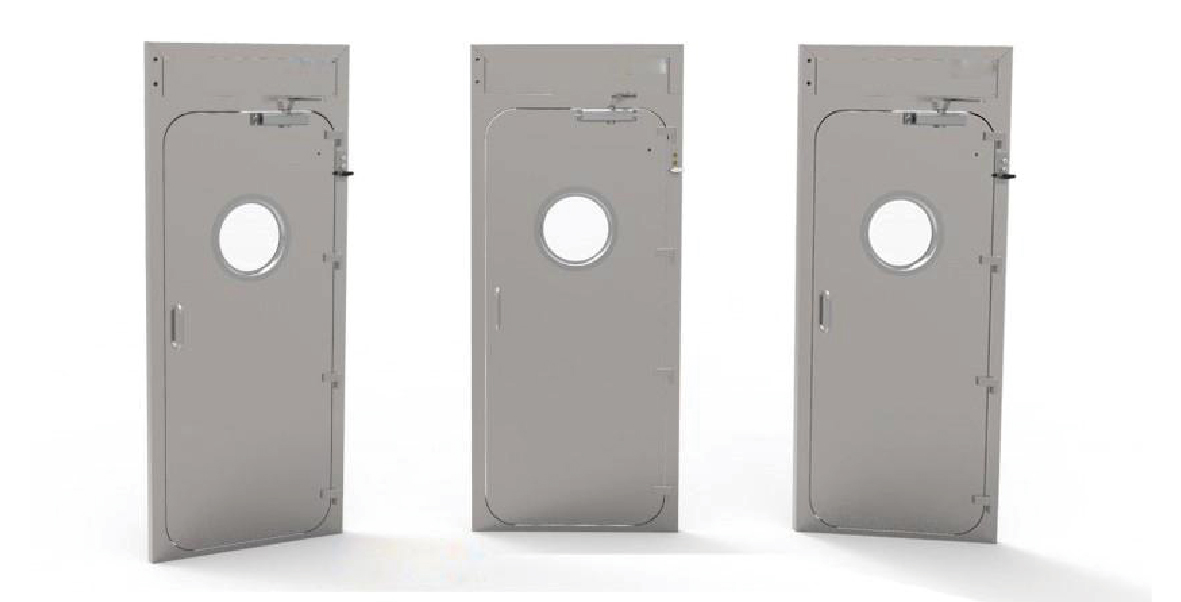
Structural integrity dictates overall performance. You must specify high-strength 304 or 316L stainless steel profiles. Flimsy frames flex significantly under high differential pressure. Frame rigidity directly impacts the gap tolerance. The inflatable seal must bridge this gap consistently. If the frame bows outward, the expanded elastomer cannot maintain contact. A rigid, fully welded stainless-steel frame prevents this deflection entirely.
Seal material science plays a crucial role. Medical-grade silicone dominates this specific application space. It offers extreme resistance to Vaporized Hydrogen Peroxide (VHP) decontamination cycles. Standard EPDM or neoprene elastomers degrade rapidly after repeated VHP exposure. They crack, harden, and eventually fail. FDA-compliant silicone remains highly flexible. It maintains a non-porous surface structure. This prevents harmful microbial harboring.
Active Pneumatic Response (APR) systems handle the actual inflation. You need intelligent control systems. The door must feature dual-channel control valves. If one valve malfunctions, the secondary valve sustains internal pressure. Onboard pressure sensors detect microscopic air leaks early. They monitor the internal tube pressure continuously. They alert operators immediately before a total containment breach occurs.
| Material Type | VHP Resistance | Flexibility Retention | Particulate Generation |
|---|---|---|---|
| Medical-Grade Silicone | Excellent | High | Zero |
| Standard EPDM | Moderate | Medium | Low |
| Neoprene | Poor | Low | High |
Regulatory frameworks govern every equipment decision you make. A high-performance cleanroom door directly impacts GMP and FDA audits. Inspectors scrutinize cross-contamination controls strictly under 21 CFR Part 211. They look for verifiable separation between varying classification zones. Traditional doors often fail these intense inspections. Active pneumatic systems provide documented, repeatable isolation. This gives inspectors the empirical data they demand.
ISO 14644 standards dictate rigid particulate limits. Friction from standard floor-sweeping gaskets generates microscopic dust continuously. This dust compromises ISO Class 5 and Class 7 environments. Pneumatic systems eliminate this dragging friction entirely. The tube inflates only after the door closes fully. It deflates completely before the door swings open. The cycle generates absolutely zero particulate matter.
Audit-ready data logging proves your daily compliance. Modern control panels track critical metrics constantly. They record inflation pressure drops. They log exact cycle counts. They capture historical alarm states. You integrate this control panel directly into your SCADA or BMS networks. This integration generates automatic compliance documentation. You hand these digital logs directly to auditors upon request.
Failing to log pressure drop data during initial baseline testing.
Ignoring micro-leaks in the facility compressed air supply lines.
Using non-FDA compliant lubricants on surrounding door hinges.
Skeptical buyers always ask about the power loss scenario. What happens if facility air pressure fails unexpectedly? Does the seal deflate instantly? Containment loss during an outage poses extreme risks. You must evaluate models featuring localized air reservoirs. An integrated backup tank inside the frame holds compressed air safely. It maintains the seal inflation for hours during a total outage. Mechanical backup locking systems engage simultaneously. They prevent accidental door openings until power returns. A verifiable biosafety door always includes these critical fail-safes.
Safety interlocks manage complex laboratory workflows safely. Programmable logic controllers (PLC) govern these advanced interlock functions. They sequence door openings precisely in airlocks and pass-through chambers. Door A remains securely locked while Door B opens. The PLC prevents simultaneous access effectively. This protects personnel from accidental exposure events.
Maintenance teams face tough daily realities. Elastomeric seals eventually wear out. You will replace them eventually. Specify doors allowing exceptionally fast change-outs. Maintenance personnel should swap the elastomeric tube in under 15 minutes. They should accomplish this using zero specialized heavy tooling. The replacement process must preserve surrounding cleanroom integrity entirely. Quick replacements ensure maximum facility uptime.
Selecting the right hardware requires a methodical approach. We break this evaluation process into four distinct steps. Follow these steps to ensure you choose a reliable airtight door.
Define specific pressure requirements: Categorize your needs based on positive or negative pressure applications. OSD manufacturing relies on positive pressure cascades. Viral vector BSL-3 labs require deep negative pressure containment. Your hardware must match these exact airflow directions.
Request validation documentation upfront: Never purchase containment hardware without empirical proof. Demand factory acceptance testing (FAT) data immediately. Verify the exact air leak rates under maximum design pressure. If a supplier refuses FAT data, disqualify them quickly.
Execute rigorous supplier vetting: Look for manufacturers offering comprehensive validation protocol support. Hardware alone is insufficient. You need complete IQ/OQ/PQ (Installation, Operational, and Performance Qualification) documentation. This paperwork validates the physical installation against regulatory standards.
Assess lead times versus custom engineering: Standard sizes reduce capital expenditure significantly. They speed up facility rollout schedules. Custom engineering solves unique spatial challenges during retrofits. However, custom designs extend delivery times drastically. Balance your timeline against spatial constraints carefully.
Take time to review engineering drawings closely. Verify the placement of onboard air compressors and pneumatic valves. Ensure your facility maintenance team can access these components easily. Proper planning during the shortlisting phase prevents operational headaches later.
Specifying a pneumatic biosafety door requires balancing high-containment performance against daily operational reliability.
Active pneumatic technology outperforms mechanical compression by adapting to frame deviations dynamically.
FDA-compliant, VHP-resistant medical silicone ensures long-term survival in harsh decontamination environments.
Fail-safe mechanisms, including localized air backup tanks, prevent catastrophic containment losses during power outages.
Comprehensive FAT documentation and IQ/OQ/PQ protocol support remain mandatory for smooth regulatory approvals.
You must prioritize fail-safe pneumatics and verifiable FAT data over baseline pricing alone. Do not compromise on critical isolation infrastructure. Evaluate your current mechanical seals today. Look for dragging friction, sagging hinges, and fluctuating room pressure. If you observe these symptoms, your facility is at risk. Consult immediately with specialized containment engineers. Request a detailed technical drawing from a reputable manufacturer. Schedule a comprehensive site capability assessment to begin your upgrade process.
A: The lifespan depends heavily on usage frequency and chemical exposure. A high-quality silicone seal typically lasts between 10,000 and 50,000 cycles. Intense Vaporized Hydrogen Peroxide (VHP) sterilization protocols accelerate wear. You should schedule preventive inspections annually. Replace the elastomeric tube immediately if surface micro-cracking appears.
A: Yes, properly specified models handle power failures seamlessly. They utilize integrated backup air tanks. These localized reservoirs maintain internal tube pressure for several hours. Additionally, automatic mechanical locks engage instantly upon power loss. This combination prevents accidental openings and sustains isolation until backup generators activate.
A: Medical-grade silicone is the dominant standard. It offers superior FDA compliance and non-porosity. It withstands highly aggressive VHP compatibility tests. Alternative elastomers like standard EPDM or neoprene exist. However, they fail much faster under repeated chemical sterilization. Silicone provides the highest reliability for high-containment environments.
A: Validation teams utilize pressure decay testing methodologies primarily. They seal the room and measure the exact Pascal drop over a specific time frame. Smoke testing provides secondary visual validation. Engineers release chemical smoke near the door edges to identify microscopic drafts. Passing both tests verifies strict containment integrity.


