 EnglishEnglish


Views: 0 Author: Site Editor Publish Time: 2026-02-24 Origin: Site


When people ask whether an Air Shower is effective, they' re rarely asking about a machine in isolation—they' re asking whether it meaningfully reduces contamination risk in the real world. In cleanrooms, labs, pharmaceutical production areas, electronics assembly lines, and any controlled environment where particles can cause defects or compliance issues, “effective” has a practical definition: Does it measurably reduce the dust, fibers, and loose particles carried on clothing and surfaces before entry?
From our experience supporting contamination-controlled facilities, the answer is: yes, an Air Shower is effective—when it' s correctly specified, installed, and used as part of a complete entry control system. An Air Shower is not a magical barrier that replaces gowning protocols, sticky mats, differential pressure, or good housekeeping. Instead, it plays a specific, valuable role: it removes loose particles from personnel and carts at the most vulnerable point of the cleanroom chain—entry.
In this article, we’ll break down what “effective” truly means for an Air Shower, how it works, what factors decide performance, where it delivers the biggest return, and how to evaluate whether it’s the right choice for your facility. We’ll also share practical selection tips—because the best Air Shower is not the “most powerful,” but the one that matches your process, space, and cleanliness goals.
An Air Shower is an enclosed chamber installed at a controlled-area entrance. High-velocity air jets (typically from stainless steel nozzles) blow filtered air across a person or an object to dislodge particles from garments, hair covers, sleeves, and exposed surfaces. The dislodged particles are then pulled through return air vents and captured by filtration—commonly HEPA, and in some applications ULPA—before the air is recirculated.
Removes loose surface particles from clothing, shoes, and exposed surfaces
Reduces particle transfer from “less clean” to “more clean” zones
Improves entry discipline (a physical checkpoint encourages proper flow control)
Supports audits and compliance by providing a standardized entry step
It does not sterilize (it' s not a substitute for disinfection or aseptic technique)
It does not eliminate particles generated after entry (e.g., movement, process friction)
It does not replace gowning rooms, pass boxes, or pressure cascades
Effectiveness is strongest when the Air Shower is integrated into a broader contamination-control plan.
Air Shower performance comes down to basic particle mechanics: air velocity + coverage + time + filtration + airflow path.
Air velocity dislodges particles
Particles adhere to fabrics through electrostatic forces and mechanical trapping. High-speed airflow breaks those weak bonds and removes particles that would otherwise fall off later inside the cleanroom.
Coverage determines consistency
If jets are poorly positioned, large areas remain untreated. Effective units provide multi-directional airflow (side and top jets in many designs) to cover common contamination zones: shoulders, sleeves, front torso, and legs.
Cycle time matters
Too short, and particles aren' t fully removed. Too long, and throughput suffers. The “best” time depends on garment type, personnel behavior, and cleanliness class goals.
Filtration prevents recontamination
The system must capture dislodged particles rather than circulate them back. High-quality filtration and stable air handling are non-negotiable for performance.
Airflow path controls where particles go
Return vents and internal airflow design affect whether particles are pulled away efficiently or swirl inside the chamber.
In short: An Air Shower is effective when it creates a controlled air “scrubbing” event and removes particles from the entry stream without redistributing them.
Not every Air Shower delivers the same result. Below are the most important variables that decide effectiveness—more than brand names or appearance.
The stricter the cleanroom class and the more sensitive the process (e.g., microelectronics, precision optics, pharmaceuticals), the more important entry particle control becomes. Air Showers are most impactful when small particle loads can cause measurable losses.
If personnel wear garments that shed fibers, or if operators move quickly and brush surfaces, contamination transfer risk rises. Air Showers help, but effectiveness also depends on:
Standing posture during cycle
Turning slowly if required
Avoiding hand contact with walls or doors
A chamber with insufficient jets may “feel strong” but still miss key contamination zones. Proper jet angles and distribution are what make cleaning uniform.
A high-spec filter is only as good as its housing, sealing, and airflow design. Leakage, poor sealing, or weak return airflow will reduce effectiveness.
Without interlock control, people can bypass the cycle or disrupt the pressure boundary. For many controlled facilities, interlock logic is essential to maintain a consistent entry protocol.
Air Showers show the strongest value in environments where:
People are frequent contamination carriers (high traffic)
Product sensitivity is high
Yield loss or compliance risk is expensive
Typical high-value applications include:
Pharmaceutical manufacturing and packaging
Electronics/semiconductor assembly
Medical device production
Laboratory controlled areas
Food processing with high hygiene requirements
Paint and coating lines sensitive to dust defects
In these settings, an Air Shower is not “optional equipment”—it becomes part of risk management.
Air Showers often work alongside other controls. Here’s a practical comparison:
Entry Control Method | What It Controls Best | Strengths | Limitations |
Air Shower | Loose particles on people/carts | Fast, repeatable, visible control point | Not sterilization; depends on correct use |
Gowning Room | Garment change & discipline | Strong systematic control | Space/time intensive |
Sticky Mats | Foot-borne particles | Low cost, simple | Limited to soles; needs replacement |
Air Curtains | Air barrier at doorway | Continuous flow, quick | Less “scrubbing” effect; airflow can be disrupted |
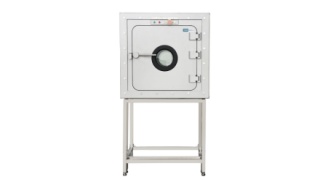
Pass Box | Material transfer | Limits cross-zone exposure | Only for objects, not personnel |
In most clean facilities, the best design is not one method—it’s a layered approach. Air Showers fit as a strong layer for controlling what enters with people and carts.
If you’re deciding whether an Air Shower is worth it—or whether your existing unit is performing—use these practical indicators:
Reduced dust-related defects (surface contamination, coating flaws, optical failures)
Improved stability in cleanroom particle monitoring near entry zones
Lower rework rates linked to contamination
More consistent entry behavior by operators
Stable airflow and pressure performance during cycle
Proper filtration maintenance and monitoring
No excessive swirling or particle redeposition inside the chamber
Interlock logic working reliably
Cycle time matches traffic and gowning requirements
Personnel training is consistent
Entry layout prevents bypassing or congestion
If any of these are weak, the Air Shower may still be “working,” but not optimally effective.
Yes—an Air Shower is effective when it’s treated as a designed contamination-control step rather than a standalone “box at the door.” In real facilities, it helps reduce the particle load carried into controlled areas, strengthens entry discipline, and supports stable cleanroom performance—especially in high-sensitivity manufacturing and regulated environments. The key is making sure the unit matches your workflow (people vs. carts), provides proper jet coverage, uses reliable filtration, and is supported by interlock logic and training.
At Cigeair (Shenzhen) Technology Group Co., Ltd., we approach Air Shower projects from the perspective of practical effectiveness: how the system fits your site layout, entry traffic, cleanliness goals, and long-term maintenance reality. If you’re planning a new cleanroom entrance, upgrading an existing controlled area, or troubleshooting contamination near entry points, we're happy to share selection guidance and configuration ideas based on your application—so you can build a solution that performs in daily operations, not just on paper.
1 Are air showers effective for cleanrooms with high traffic?
Yes. In high-traffic cleanrooms, an Air Shower is often more valuable because it standardizes entry behavior and reduces the particle load carried in repeatedly throughout the day.
2 Do air showers remove bacteria or sterilize personnel?
No. An Air Shower is designed to remove loose particles and dust from surfaces. It does not sterilize and should be used alongside hygiene and gowning protocols.
3 What makes an air shower more effective: HEPA or ULPA filtration?
Both can be effective. HEPA is widely used for many cleanroom applications, while ULPA is typically chosen when stricter particle control is required. The overall sealing and airflow design are just as important as filter grade.
4 How long should an air shower cycle be to be effective?
Cycle time depends on garment type, cleanliness requirements, and workflow. A properly set cycle balances particle removal with throughput, ensuring staff can enter efficiently without skipping steps.


